Can a Fire-Damaged Sculpture Be Restored? What to Do Before It's Too Late
Fire Damaged Sculpture Restoration can help property owners, collectors, and businesses determine whether valuable sculptures affected by flames, smoke, soot, and firefighting water can be recovered. A fire does not necessarily mean that a sculpture is beyond repair. Even when an artwork appears severely discolored or covered in soot, its underlying material may still be intact. However, the possibility of successful restoration depends on the sculpture's material, the intensity of heat exposure, the extent of contamination, and the condition of its structure.
Sculptures are often more than decorative objects. They may represent significant financial investments, personal memories, artistic achievements, cultural heritage, or historical value. A bronze statue inherited from a family member, a marble sculpture displayed in a corporate reception area, or a handcrafted wooden artwork may be impossible to replace.
Unfortunately, fire can affect these objects in several ways. Direct flames may cause cracking, melting, or structural deterioration. Smoke can leave persistent odors, while soot may settle into textured or porous surfaces. Water from sprinklers and firefighting hoses can introduce additional damage.
The important thing to understand is that a fire-damaged sculpture should not automatically be considered a total loss. Professional assessment may reveal restoration possibilities that are not immediately obvious.
In this guide, CRDN Team Crouch explores how fire affects different sculpture materials, what professional restoration involves, what property owners should do immediately after a fire, and how to determine whether restoration or replacement is the more appropriate option.
Fire Damaged Sculpture Restoration: Can a Sculpture Really Be Saved After a Fire?
Yes, some fire-damaged sculptures can be restored. However, the extent of recovery depends on the type of damage and the characteristics of the artwork.
A sculpture exposed to smoke and surface soot may have different restoration possibilities from one exposed directly to intense heat. Similarly, a bronze sculpture may respond differently to fire exposure than a wooden, marble, or ceramic artwork.
Before deciding whether to restore or replace a sculpture, professionals need to evaluate several factors.
1. The Sculpture's Material
The material determines how the sculpture responds to heat, soot, water, and cleaning treatments.
For example:
- Bronze: May develop soot deposits, discoloration, or changes to its patina.
- Marble: May experience staining, surface deterioration, cracking, or heat-related changes.
- Wood: May absorb smoke odors, become charred, crack, or lose structural stability.
- Ceramic: May develop cracks, fractures, broken sections, or damaged decorative finishes.
- Stone: May experience surface deterioration, staining, or structural changes depending on its composition.
- Mixed media: Different components may react differently to heat, smoke, and moisture.
Understanding the material is essential before selecting a restoration approach.
2. The Severity of Heat Exposure
A sculpture located in a room affected by smoke may remain structurally intact, even if its surface requires extensive cleaning.
An artwork exposed directly to flames may experience much more serious damage.
High temperatures can cause some materials to crack, warp, discolor, weaken, or lose their original surface characteristics. In certain cases, these changes are irreversible.
3. The Extent of Soot and Smoke Contamination
Smoke can travel beyond the room where the fire started. Consequently, sculptures in adjoining rooms may become contaminated even when they were never directly exposed to flames.
Soot may settle on the surface or become embedded in porous materials.
The longer certain soot residues remain untreated, the more difficult they may become to remove without damaging the artwork.
4. The Sculpture's Structural Condition
A sculpture may look intact but have hidden fractures, weakened joints, or damaged internal supports.
These issues are particularly important for large sculptures, multi-piece installations, and artworks containing attached components.
A proper assessment should consider both visible surface damage and structural stability.
The key principle is simple: assess before cleaning, repairing, or discarding. The correct restoration decision begins with understanding what actually happened to the sculpture.
How Fire Damages Different Types of Sculptures
Not all sculptures respond to fire in the same way. Understanding the characteristics of different materials helps explain why professional sculpture restoration requires a tailored approach.
Bronze Sculpture Restoration After Fire
Bronze is commonly used for statues, decorative sculptures, memorials, and public artworks.
Although bronze is durable, fire can still affect its appearance and protective surfaces.
Potential problems include:
- Soot and smoke residue.
- Discoloration.
- Changes to the original patina.
- Damage to protective coatings.
- Heat-related deterioration.
- Damage to joints or attached components.
The patina is particularly important. It contributes to the sculpture's appearance and may be part of its artistic character.
Aggressive polishing or inappropriate cleaning can permanently alter the original finish.
Professional bronze sculpture restoration should therefore focus on assessing the surface, identifying contamination, and selecting treatments that preserve the artwork's original characteristics.
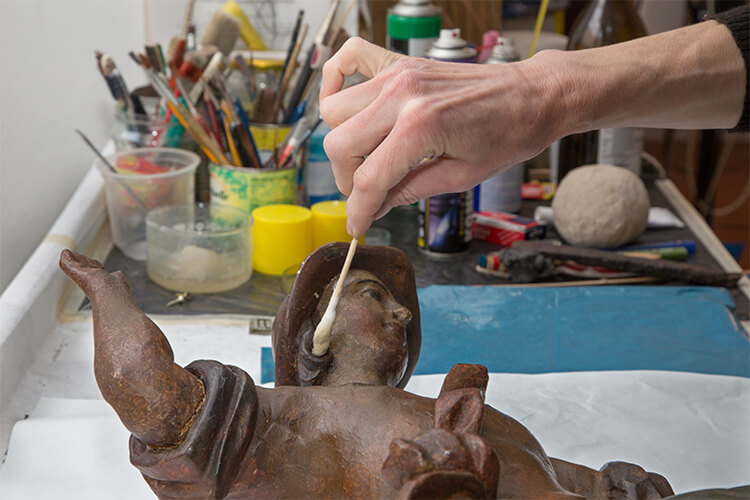
Marble and Stone Sculpture Restoration
Marble and other stone sculptures may appear resistant to fire because they do not burn like organic materials.
However, high temperatures can still cause serious damage.
Depending on the type of stone and the intensity of exposure, heat may contribute to cracking, surface changes, weakened areas, and discoloration.
Soot may also become embedded in porous surfaces, making removal difficult.
The National Archives provides useful information about fire and water damage to collection objects in its Objects Recovery guidance. Its guidance explains that extreme heat can affect stone materials and that soot may become ingrained in porous surfaces.
For this reason, marble sculpture restoration should not involve indiscriminate scrubbing, household cleaning products, or untested chemical treatments.
Wooden Sculpture Restoration After Fire
Wooden sculptures are particularly vulnerable to direct flame exposure because wood is combustible.
Even when a wooden sculpture does not burn completely, it may experience:
- Surface charring.
- Cracking and splitting.
- Smoke odor absorption.
- Discoloration.
- Damage to decorative finishes.
- Weakening of joints and connections.
Smoke may also penetrate textured carvings and detailed surfaces.
Restoration possibilities depend on how deeply the fire affected the wood and whether the sculpture retains sufficient structural integrity.
Ceramic Sculpture Restoration After Fire
Ceramic sculptures may survive some fire conditions, but that does not mean they are immune to damage.
Sudden temperature changes can contribute to cracking or fractures. Decorative glazes, painted finishes, and attached elements may also be affected.
A ceramic sculpture that appears intact should still be examined for hairline cracks and other signs of deterioration.
Mixed-Media Sculpture Restoration
Contemporary sculptures often combine materials such as wood, metal, glass, resin, stone, textiles, and adhesives.
These artworks can present additional challenges because each component may respond differently to heat.
For example, a metal structure may remain intact while an attached resin element melts or a decorative textile component becomes charred.
Mixed-media sculpture restoration requires an understanding of how the different materials interact and which treatment methods are appropriate for each component.
What Happens to Sculptures When Smoke and Soot Spread Through a Property?
One of the biggest misconceptions about fire damage is that only objects touched by flames are affected.
In reality, smoke and soot can spread throughout a building, settling on surfaces and entering spaces far from the original fire.
This means a sculpture displayed in a hallway, office, gallery, or adjoining room may require restoration even when the fire occurred elsewhere.
Soot Contamination
Soot consists of fine particles produced during incomplete combustion.
Depending on what burned, soot may be powdery, greasy, or difficult to remove.
When it settles on sculptures, it can:
- Dull the original finish.
- Cover intricate details.
- Discolor surfaces.
- Become embedded in porous materials.
- Leave persistent residue.
Attempting to wipe soot away can spread the contamination or push particles further into the surface.
Smoke Odor
Smoke odors can remain after visible residue has been removed.
Porous materials and textured surfaces may retain odor-causing residues, making ordinary cleaning insufficient.
Professional assessment helps determine whether additional cleaning or specialized deodorization is appropriate.
Why Prompt Assessment Matters
The National Park Service advises that smoke and soot can cause significant damage to collection objects and recommends working with conservators to treat affected objects as quickly as possible.
Its Museum Handbook guidance on fire protection explains the importance of proper post-fire response and the risks associated with smoke, soot, and firefighting water.
The objective is not to rush into cleaning. It is to prevent avoidable deterioration while ensuring that treatment is performed appropriately.
What to Do Immediately After a Fire Damages Your Sculpture
The actions taken immediately after a fire can influence the condition of valuable artwork.
If a sculpture has been affected, avoid attempting to restore it yourself before its condition has been assessed.
Here are important steps to consider.
1. Prioritize Safety
Do not enter a fire-damaged building until emergency personnel or the appropriate authorities have confirmed that it is safe.
Fire-damaged structures may contain unstable materials, hazardous residues, and other safety risks.
Even after the fire is extinguished, the environment may not be suitable for handling belongings.
2. Avoid Touching or Wiping the Sculpture
Soot can be abrasive and may become more difficult to remove when rubbed into a surface.
Avoid using household cloths, brushes, detergents, or cleaning chemicals.
The sculpture may be more fragile than it appears.
3. Photograph the Damage
When it is safe to do so, photograph the sculpture from several angles.
Capture:
- Overall condition.
- Visible soot deposits.
- Cracks and fractures.
- Discoloration.
- Broken or missing components.
- The surrounding area.
These photographs may help document the damage for restoration assessment and insurance purposes.
4. Preserve Broken Pieces
If parts of the sculpture have broken off, avoid discarding them.
Fragments may be important for potential repair or reconstruction.
Where safe and practical, keep loose pieces together in clearly identified containers. Avoid attempting to reattach them yourself.
5. Contact Your Insurance Representative
Report the damage and ask about the documentation and authorization requirements for the contents portion of your claim.
Do not assume that restoration services are automatically covered. Insurance coverage depends on the terms and conditions of the applicable policy.
6. Seek Appropriate Restoration Expertise
Sculptures with significant artistic, historical, or financial value may require a conservator who specializes in the relevant material.
The American Institute for Conservation's fire recovery resources provide guidance for salvaging fire-damaged objects and accessing conservation assistance.
A contents restoration provider can also help with inventory, documentation, packout, transportation, and coordination of appropriate restoration services.
The Professional Fire Damaged Sculpture Restoration Process
Professional fire damaged sculpture restoration follows a structured process designed to assess the damage, protect the artwork, and determine the most appropriate recovery options.
The exact approach depends on the sculpture and the extent of the loss.
Step 1: Initial Inspection and Damage Assessment
The first stage involves examining the sculpture and documenting its condition.
The assessment considers:
- Material and construction.
- Visible soot and smoke contamination.
- Heat-related damage.
- Cracks and structural weaknesses.
- Water exposure.
- Existing repairs and surface finishes.
- Potential restoration requirements.
This helps establish the extent of the damage and whether specialist conservation expertise is necessary.
Step 2: Contents Inventory and Documentation
For insurance-related property losses, documenting the sculpture is important.
Records may include photographs, descriptions, material identification, dimensions, visible damage, and relevant ownership information.
This documentation helps track the artwork throughout the restoration process and may support communication with the insurance adjuster.
Step 3: Safe Packing and Transportation
A damaged sculpture may need to be removed from the property while repairs and restoration work take place.
This requires appropriate handling and packing based on the sculpture's size, weight, material, and condition.
Large or fragile sculptures may require customized support and transportation arrangements.
Where the artwork is part of a wider property loss, this stage may be coordinated through professional contents packout services.
Step 4: Cleaning and Contamination Assessment
Once the sculpture has been assessed, an appropriate cleaning strategy can be developed.
Depending on the material and damage, treatment may address surface soot, smoke residue, or other contamination.
The selected process should protect original surfaces and finishes.
Not every sculpture can tolerate the same cleaning methods, and some objects may require treatment by a specialist art conservator.
Step 5: Repair and Stabilization
Where appropriate, damaged areas may require stabilization or repair.
This could involve addressing cracks, securing detached components, or treating areas affected by structural deterioration.
The goal is to improve stability while preserving as much original material as possible.
Step 6: Quality Assessment and Documentation
Following treatment, the artwork should be reviewed to evaluate its condition.
The review may consider remaining contamination, surface appearance, structural stability, and any limitations that remain.
Documentation of the treatment and outcome can help property owners understand what was achieved and whether further specialist care is necessary.
Step 7: Storage and Return
If the property is still undergoing repairs, the sculpture may require appropriate temporary storage.
Storage conditions should account for the artwork's material, size, and environmental requirements.
Once the property is ready, the sculpture can be prepared for safe return and placement.
Sculpture Restoration vs. Replacement: Which Is the Better Decision?
After a fire, property owners may assume that replacing a damaged sculpture is easier than restoring it.
However, replacement does not always make sense.
A sculpture may have unique artistic qualities, historical significance, or sentimental value that cannot be reproduced.
When Restoration May Be Worth Considering
Restoration may be appropriate when:
- The sculpture has significant artistic or sentimental value.
- Damage is limited or potentially treatable.
- The original material remains sufficiently intact.
- Structural stability can be addressed.
- Appropriate restoration expertise is available.
When Replacement May Be More Practical
Replacement may be necessary when:
- The sculpture has suffered extensive irreversible damage.
- Large sections have been destroyed.
- Structural integrity cannot be adequately restored.
- Contamination cannot be safely addressed.
- Restoration is not practical given the object's condition.
The decision should be based on professional assessment, not simply the appearance of the sculpture immediately after the fire.
For insurance claims, restoration recommendations and replacement considerations should be documented and discussed with the insurer.
How Professional Contents Restoration Supports Sculpture Recovery
Sculpture restoration may be one part of a much larger property recovery process.
After a fire, homeowners and businesses may also need assistance with furniture, clothing, electronics, artwork, documents, and other belongings.
Professional contents restoration helps organize the management of these affected items.
Depending on the circumstances, the process may include:
- Contents inventory and documentation.
- Photographic records.
- Professional packout services.
- Packing and transportation.
- Cleaning and deodorization.
- Coordination of specialized restoration.
- Appropriate storage.
- Pack-back after property repairs.
This is particularly useful when the property requires extensive repairs and belongings cannot safely remain inside.
For valuable sculptures, a contents restoration provider can help coordinate the handling and documentation process while specialist conservators address treatment requirements where necessary.
The distinction matters: contents restoration helps manage and coordinate the recovery of belongings, while specialized art conservation may be required for complex sculpture treatment.
Why Choose CRDN Team Crouch for Contents Restoration After a Fire?
When fire affects a property, the recovery process should account for more than structural repairs.
Valuable artwork, decorative objects, and personal belongings may also require careful documentation, handling, cleaning, storage, and restoration coordination.
CRDN Team Crouch supports contents restoration needs involving belongings affected by property damage.
Whether a property loss involves smoke-damaged artwork, soot-covered furniture, water-affected textiles, or a large volume of contents requiring packout, an organized restoration process can help property owners understand their options.
For sculptures and other valuable artwork, the first priority is determining the object's condition and identifying the appropriate restoration expertise.
Some items may be suitable for contents cleaning and restoration, while others may require a specialist conservator.
CRDN Team Crouch's contents restoration approach focuses on helping property owners manage affected belongings through appropriate assessment, documentation, packout, and restoration coordination.
Our commitment is to restore more than property by helping protect the belongings that make homes and businesses meaningful.
Frequently Asked Questions About Fire Damaged Sculpture Restoration
1. Can a sculpture be restored after a fire?
Yes, some sculptures can be restored after a fire. The outcome depends on the material, severity of heat exposure, soot contamination, structural condition, and availability of appropriate restoration expertise.
2. Can soot be removed from a sculpture?
Soot can sometimes be removed through appropriate professional cleaning. However, the method depends on the sculpture's material and surface finish. Improper cleaning may spread contamination or cause permanent damage.
3. Does smoke damage sculptures even when flames do not reach them?
Yes. Smoke can travel through a property and leave residue and odors on sculptures located away from the fire. These items may still require assessment and cleaning.
4. Can a bronze sculpture survive a fire?
Some bronze sculptures may remain structurally intact after a fire, but their patina, protective coatings, and surface appearance can be affected. Professional assessment helps determine appropriate restoration options.
5. Can marble sculptures be restored after heat damage?
Some marble sculptures may be restored or stabilized, depending on the severity of heat exposure and the condition of the stone. Severe heat can cause cracking, surface deterioration, and other irreversible changes.
6. Should I clean a fire-damaged sculpture myself?
No. Avoid rubbing soot, applying household cleaning products, or attempting repairs before the sculpture has been assessed. These actions may make restoration more difficult.
7. How much does fire-damaged sculpture restoration cost?
The cost depends on the sculpture's size, material, value, damage, and the complexity of the required treatment. A professional assessment is necessary before an accurate estimate can be provided.
8. Does homeowners insurance cover sculpture restoration?
Coverage depends on the cause of the damage and the terms, conditions, and limits of the insurance policy. Property owners should document the damage and discuss restoration options with their insurer.
9. How soon should a fire-damaged sculpture be assessed?
As soon as the property is confirmed safe to access. Early assessment can help identify contamination, prevent avoidable handling damage, and determine appropriate stabilization and restoration steps.
Don't Assume Your Fire-Damaged Sculpture Is Beyond Saving
Fire damaged sculpture restoration can provide a path toward recovering artwork affected by flames, smoke, soot, and firefighting water.
Although some sculptures may suffer irreversible damage, others may retain significant restoration potential. The difference often comes down to the material, the extent of exposure, the sculpture's condition, and the expertise involved in its assessment and treatment.
If a fire has affected your sculpture, avoid attempting aggressive cleaning or discarding it before its condition has been evaluated.
Professional assessment can help establish what can be restored, what requires specialist conservation, and when replacement may be the more practical option.
At CRDN Team Crouch, we understand that recovering from a property disaster involves more than repairing a building. It also means considering the belongings, artwork, and personal possessions that matter.
Has a fire affected your artwork or other valuable belongings?
Contact CRDN Team Crouch to discuss your contents restoration needs.
Phone: (903) 908-1919
Website: www.crdntx.com
CRDN Team Crouch — Restoring More Than Property.
Categories
Recent Posts
-
November 5, 2026
Can a Fire-Damaged Sculpture Be Restored? What to Do Before It's Too Late
-
November 3, 2026
What Is Sculpture Restoration? Can Damaged Sculptures Really Be Saved?
-
October 27, 2026
Packout Companies Working With Adjusters: How Contents Restoration Simplifies Insurance Claims After Property Damage