What Is Sculpture Restoration? The Complete Guide to Preserving Valuable Sculptures After Fire, Water, Smoke, and Environmental Damage
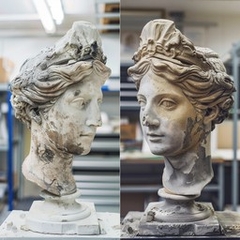
What is sculpture restoration? It is a question frequently asked by homeowners, art collectors, museums, businesses, religious institutions, and insurance professionals after a sculpture has been damaged by fire, water, smoke, storms, or years of environmental exposure. Sculptures are more than decorative objects, they often represent history, culture, personal memories, artistic achievement, and significant financial investments. Whether crafted from marble, bronze, wood, stone, resin, ceramic, or mixed media, every sculpture requires specialized care to preserve its structural integrity and artistic value.
Unlike ordinary household belongings, sculptures cannot simply be cleaned using conventional methods after a disaster. Smoke residue, moisture, soot, corrosion, mold, and environmental pollutants can permanently alter surfaces, weaken structural components, and diminish the value of artwork if not treated correctly. Professional sculpture restoration services combine conservation science, restoration expertise, and meticulous craftsmanship to recover damaged artwork while maintaining its authenticity.
CRDN Team Crouch understands the importance of preserving valuable artwork as part of a complete contents restoration strategy. Through specialized art restoration services, expert pack-out procedures, controlled storage, and partnerships with experienced conservation professionals, CRDN Team Crouch helps homeowners, businesses, galleries, and institutions protect sculptures before, during, and after restoration.
According to the American Institute for Conservation (AIC), professional conservation focuses on preserving cultural property through scientific examination, preventive care, and ethical restoration practices that maintain the integrity of the original work.
Whether the damage results from a residential fire, commercial water loss, severe storm, or long-term environmental deterioration, understanding what is sculpture restoration can help property owners make informed decisions that protect irreplaceable works of art.
What Is Sculpture Restoration?
What is sculpture restoration? Sculpture restoration is the professional process of assessing, stabilizing, cleaning, repairing, and preserving sculptures that have been damaged by fire, water, smoke, environmental contaminants, aging, or accidental impact. Unlike cosmetic repairs, professional restoration aims to preserve both the artistic integrity and historical significance of the sculpture while minimizing additional intervention.
Professional sculpture conservation typically involves several disciplines working together, including conservation science, chemistry, materials engineering, fine art restoration, and preventive preservation.
According to the Smithsonian Museum Conservation Institute, conservation professionals evaluate the materials, construction methods, deterioration processes, and environmental conditions affecting an artwork before determining the safest restoration approach.
This careful evaluation is essential because every sculpture responds differently to contamination and environmental stress.
For example:
- Bronze sculptures may corrode after water exposure.
- Marble sculptures can absorb smoke residues and staining.
- Wooden sculptures may swell, crack, or develop mold after moisture intrusion.
- Resin and composite sculptures may soften or discolor under excessive heat.
- Ceramic sculptures can suffer structural fractures during disasters.
CRDN Team Crouch recognizes these complexities and ensures valuable sculptures receive specialized handling from the moment they are removed from an affected property.
Why Sculpture Restoration Is More Important Than Many Property Owners Realize
Many homeowners focus first on repairing structural damage after a disaster.
However, valuable artwork often represents one of the most irreplaceable categories of contents inside a property.
Sculptures frequently possess:
- Significant financial value
- Historical importance
- Emotional significance
- Cultural relevance
- Family heritage
According to the National Park Service Museum Handbook, preventive conservation and prompt stabilization dramatically improve the long-term preservation of museum-quality objects after disasters.
Waiting too long to restore damaged sculptures can allow deterioration to continue.
Fire residues become increasingly acidic.
Moisture promotes corrosion.
Environmental pollutants continue interacting with delicate surfaces.
Professional art conservation services help interrupt these destructive processes before permanent damage occurs.
Common Causes of Sculpture Damage
Understanding what causes sculpture deterioration helps explain why professional restoration is so specialized.
Fire Damage
Even when flames never directly touch a sculpture, smoke and soot contamination may spread throughout an entire building.
According to the National Fire Protection Association (NFPA), smoke particles travel rapidly during structure fires and settle on surfaces throughout the property.
Fire damage commonly causes:
- Smoke staining
- Acidic soot deposits
- Surface discoloration
- Heat stress
- Structural weakening
Professional fire damaged sculpture restoration focuses on safely removing contaminants while preserving delicate finishes.
Water Damage
Water can be equally destructive.
Common sources include:
- Burst pipes
- Flooding
- Roof leaks
- Storm damage
- Fire suppression efforts
According to the Federal Emergency Management Agency (FEMA), moisture left untreated can continue causing damage long after the initial disaster.
Water exposure may result in:
- Corrosion
- Mineral staining
- Material swelling
- Adhesive failure
- Mold development
CRDN Team Crouch responds rapidly to stabilize valuable contents before secondary damage occurs.
Smoke and Soot Contamination
Smoke contamination extends well beyond visible staining.
Microscopic particles penetrate porous materials and continue interacting chemically with surfaces.
According to the Environmental Protection Agency (EPA), combustion particles can affect both indoor environments and sensitive materials.
Professional smoke damaged artwork restoration removes these contaminants using conservation-approved techniques that minimize risk to the original artwork.
Environmental Exposure
Not every restoration project follows a disaster.
Many sculptures gradually deteriorate due to:
- Humidity fluctuations
- UV exposure
- Air pollution
- Dust accumulation
- Oxidation
- Biological growth
According to the Canadian Conservation Institute, environmental conditions remain one of the leading causes of long-term deterioration in cultural property.
Routine inspection and professional maintenance help extend the lifespan of valuable sculptures.
Materials Commonly Restored
Professional sculpture restoration services encompass a wide variety of artistic materials.
Each requires its own conservation methodology.
Bronze Sculpture Restoration
Bronze sculptures often develop corrosion after water exposure or prolonged outdoor weathering.
Professional restoration may involve:
- Corrosion removal
- Surface stabilization
- Protective wax applications
- Patina preservation
Improper cleaning can permanently alter the sculpture's appearance.
Marble Sculpture Restoration
Marble remains one of the most recognizable sculpture materials.
However, it is highly porous.
Marble easily absorbs:
- Smoke residues
- Water stains
- Airborne contaminants
- Biological growth
Professional marble sculpture restoration removes contamination while preserving the stone's natural finish.
Stone Sculpture Restoration
Granite, limestone, sandstone, and other natural stone sculptures require specialized cleaning methods.
Restoration may include:
- Biological growth removal
- Crack stabilization
- Surface cleaning
- Protective treatments
Aggressive cleaning techniques can permanently damage natural stone surfaces.
Wooden Sculpture Restoration
Wood responds dramatically to environmental changes.
Moisture may cause:
- Swelling
- Cracking
- Warping
- Mold growth
Professional restoration helps stabilize wooden sculptures before irreversible structural damage develops.
Ceramic and Mixed-Media Sculpture Restoration
Ceramic artwork often suffers impact damage during disasters.
Mixed-media sculptures require careful evaluation because different materials react differently to:
- Heat
- Water
- Smoke
- Cleaning agents
Professional conservators develop customized restoration plans based on each sculpture's unique composition.
The Professional Sculpture Restoration Process
Every restoration project begins with careful planning.
Professional fine art restoration generally follows several critical phases.
Comprehensive Assessment
Restoration specialists examine:
- Material composition
- Existing damage
- Previous repairs
- Structural stability
- Environmental contamination
According to the Getty Conservation Institute, scientific examination is essential before conservation treatments begin.
This assessment forms the foundation of an effective restoration strategy.
Documentation
Every sculpture is carefully documented through:
- Photography
- Measurements
- Condition reports
- Damage mapping
Detailed documentation also supports insurance claims and restoration planning.
According to the National Association of Insurance Commissioners (NAIC), accurate documentation plays a critical role in resolving property claims involving valuable contents.
CRDN Team Crouch incorporates detailed inventory documentation into every professional pack-out process, ensuring artwork remains traceable and protected throughout restoration.
Why Proper Pack-Out Matters for Valuable Sculptures
One of the most overlooked aspects of successful sculpture restoration is proper handling immediately after a disaster.
Improper movement can cause additional damage before restoration even begins.
CRDN Team Crouch utilizes specialized contents restoration protocols that include:
- Protective packing materials
- Custom crating when necessary
- Secure transportation
- Climate-controlled storage
- Inventory tracking
- Chain-of-custody documentation
This careful approach minimizes secondary damage while preparing sculptures for professional conservation.
For collectors, galleries, museums, and homeowners alike, proper pack-out is often the first and most important step toward successful restoration.
Cleaning and Conservation: Precision Over Speed
Once a sculpture has been stabilized and documented, professional conservators begin one of the most delicate stages of the restoration process, cleaning.
Unlike ordinary household cleaning, sculpture cleaning involves removing contaminants without altering the original material, finish, or artistic intent.
Professional conservators may remove:
- Smoke residue
- Soot deposits
- Dirt accumulation
- Mold growth
- Water stains
- Corrosion
- Environmental pollutants
According to the American Institute for Conservation (AIC), conservation treatments should always be reversible whenever possible and should preserve the integrity of the original artwork.
This philosophy guides every professional restoration decision.
CRDN Team Crouch understands that valuable artwork deserves this level of specialized care and works with experienced conservation professionals to ensure every sculpture receives appropriate treatment.
Structural Repairs Require Specialized Expertise
Many sculptures experience structural damage during disasters.
Examples include:
- Broken limbs
- Detached bases
- Surface fractures
- Cracked stone
- Loose joints
- Warped wooden components
Professional sculpture repair focuses on stabilizing these issues while maintaining the authenticity of the artwork.
According to the Getty Conservation Institute, restoration treatments should respect both the historical significance and material composition of cultural objects.
Improper repairs using household adhesives or fillers can permanently reduce both the artistic and financial value of a sculpture.
Professional conservators carefully select restoration materials that are compatible with the original artwork and designed for long-term preservation.
Why Insurance Companies Value Professional Art Restoration
Fine art often represents one of the highest-value categories of contents inside a property.
Insurance professionals therefore require:
- Accurate documentation
- Condition reports
- Professional handling
- Restoration assessments
- Transparent communication
According to the National Association of Insurance Commissioners (NAIC), maintaining detailed inventories and documentation helps streamline property claims and improve communication between policyholders and insurers.
CRDN Team Crouch supports insurance professionals by providing:
- Comprehensive inventory documentation
- High-resolution photography
- Condition reporting
- Chain-of-custody tracking
- Restoration coordination
These processes reduce uncertainty while improving claim efficiency.
How Sculpture Restoration Saves Money
Many property owners assume restoration is more expensive than replacement.
For valuable artwork, the opposite is often true.
Professional art restoration services can help:
- Preserve investment value
- Reduce insurance claim costs
- Eliminate unnecessary replacement
- Maintain historical authenticity
- Protect sentimental significance
Unlike furniture or electronics, sculptures often cannot simply be replaced with equivalent items.
Many pieces are:
- One-of-a-kind
- Commissioned works
- Family heirlooms
- Limited editions
- Historically significant
Professional restoration helps preserve these irreplaceable assets.
The Importance of Climate-Controlled Storage
During structural repairs, artwork frequently requires temporary relocation.
Climate-controlled storage protects sculptures from:
- Temperature fluctuations
- Humidity changes
- Dust accumulation
- Additional contamination
- Accidental damage
According to the Smithsonian Museum Conservation Institute, environmental stability plays a critical role in preserving works of art.
CRDN Team Crouch provides secure pack-out and storage solutions that help maintain stable conditions while restoration work is completed.
Preventing Secondary Damage
One of the biggest threats following a disaster is secondary damage.
Examples include:
- Mold growth after water exposure
- Corrosion following humidity changes
- Continued soot deterioration
- Structural instability
- Improper handling
According to the Centers for Disease Control and Prevention (CDC), mold can begin growing within 24 to 48 hours after moisture exposure if materials remain damp.
Rapid response dramatically improves restoration outcomes.
CRDN Team Crouch emphasizes immediate stabilization because every hour counts when protecting valuable artwork.
Why DIY Sculpture Restoration Is Risky
The internet contains countless videos promoting DIY art restoration.
Unfortunately, many of these techniques permanently damage valuable artwork.
Common mistakes include:
- Using household cleaners
- Pressure washing stone sculptures
- Scrubbing soot
- Applying commercial waxes
- Sanding damaged areas
- Using construction adhesives
According to the Canadian Conservation Institute, inappropriate cleaning methods often accelerate deterioration rather than prevent it.
Professional restoration relies upon scientific analysis rather than trial and error.
For valuable sculptures, professional conservation almost always represents the safest option.
Sculpture Restoration for Residential Clients
Homeowners often own sculptures without realizing their potential value.
Residential restoration projects frequently involve:
- Garden sculptures
- Decorative marble pieces
- Bronze artwork
- Religious statues
- Family heirlooms
- Custom commissions
Whether financial or sentimental, these pieces deserve specialized protection following disasters.
CRDN Team Crouch helps homeowners safely recover artwork while coordinating restoration alongside other valuable contents.
Commercial and Institutional Sculpture Restoration
Businesses and organizations also rely on professional sculpture restoration services.
Commercial projects may involve:
- Hotels
- Corporate offices
- Universities
- Religious institutions
- Museums
- Municipal buildings
- Healthcare facilities
Public artwork often serves as an important part of an organization's identity.
Professional restoration minimizes disruption while preserving these valuable assets.
CRDN Team Crouch coordinates seamlessly with commercial clients, facility managers, insurance professionals, and restoration contractors to protect artwork throughout the recovery process.
Why Local Expertise Matters
Disasters affect communities differently.
The regions served by CRDN Team Crouch, including Ark-La-Tex, Memphis, Little Rock, Northwest Houston, and Southwest Houston, experience:
- Severe storms
- Flooding
- Fire losses
- Water damage
- High humidity
These environmental conditions increase the risk of damage to artwork and sculptures.
Local response capabilities allow CRDN Team Crouch to begin stabilization quickly, reducing the likelihood of permanent deterioration.
Their understanding of regional risks enables them to provide restoration solutions tailored to local property owners.
Why CRDN Team Crouch Is a Trusted Leader in Art Restoration Support
CRDN Team Crouch has earned the confidence of homeowners, businesses, insurance professionals, and restoration contractors by specializing in the recovery of valuable contents.
Their capabilities include:
- Specialized pack-out services
- Inventory documentation
- Climate-controlled storage
- Textile restoration
- Electronics restoration
- Fine art handling
- Sculpture transportation
- Insurance coordination
- Contents restoration management
Rather than treating artwork as ordinary contents, CRDN Team Crouch approaches every sculpture with the care, documentation, and professionalism required for museum-quality restoration support.
Their commitment to excellence helps clients protect valuable assets while reducing financial losses after disasters.
Frequently Asked Questions
Can smoke-damaged sculptures be restored?
Yes. Professional smoke damaged artwork restoration can often remove soot, odors, and contaminants while preserving the sculpture's original finish and structural integrity.
Can water-damaged sculptures be saved?
Many can. Success depends on the material, severity of exposure, and how quickly professional stabilization begins.
How long does sculpture restoration take?
Timelines vary depending on:
- Material type
- Extent of damage
- Required conservation treatments
- Structural repairs
Simple cleaning projects may take days, while museum-quality restoration can require several weeks or months.
Should damaged sculptures be moved immediately?
Only if proper handling procedures are followed.
Improper movement can cause additional fractures or structural damage.
CRDN Team Crouch utilizes professional pack-out procedures specifically designed to protect valuable artwork during transport.
What is sculpture restoration? It is far more than repairing damaged artwork. It is the careful science and skilled craftsmanship of preserving history, protecting investments, and restoring pieces that often cannot be replaced.
Whether a sculpture has suffered fire, smoke, water, mold, storm, or environmental damage, professional restoration offers the best opportunity to preserve its artistic, historical, and financial value.
CRDN Team Crouch proudly supports homeowners, businesses, collectors, museums, religious institutions, and insurance professionals through expert contents restoration, specialized pack-out services, secure storage, and coordinated fine art recovery solutions. Their commitment to excellence ensures that valuable sculptures receive the protection and care they deserve from the moment disaster strikes until they are safely returned.
When irreplaceable artwork is at risk, professional restoration is not simply an option, it is an investment in preserving history for future generations.
Contact CRDN Team Crouch today to learn how our specialized contents restoration services can help protect valuable sculptures, artwork, and treasured belongings after fire, water, smoke, or storm damage.
?? Phone: (903) 908-1919
?? Website: www.crdntx.com
CRDN Team Crouch — Restoring What Matters Most. From treasured sculptures and fine art to textiles, electronics, and valuable contents, we're committed to helping families, businesses, and communities recover with confidence.
Categories
Recent Posts
-
October 15, 2026
Insurance Packout: How Professional Contents Restoration Protects Your Belongings During an Insurance Claim
-
October 13, 2026
Items Affected by Fire and Water Damage: What Can Be Restored and What Must Be Replaced?
-
October 8, 2026
Fire Damage Restoration: How Professional Restoration Can Save Your Home and Belongings After a Fire