How Packout Works With Insurance Claims: What Homeowners and Businesses Need to Know After Property Damage
Packout and insurance claims are closely connected when a home or business experiences fire, water, smoke, or storm damage. After a major property loss, one of the first challenges is determining what happens to the belongings inside the affected building.
Furniture, clothing, electronics, artwork, documents, appliances, business equipment, inventory, and personal possessions can all be exposed to damage. Some items may be visibly damaged, while others may appear unaffected but still be vulnerable to smoke residue, moisture, corrosion, odors, mold, or contamination.
This is where a professional contents packout becomes an important part of the recovery process.
A packout is more than moving belongings from one location to another. Professional insurance packout services involve carefully documenting, packing, transporting, cleaning, restoring, storing, and eventually returning affected contents. The process creates an organized chain of accountability that can help property owners and insurance professionals understand what happened to each item throughout the restoration process.
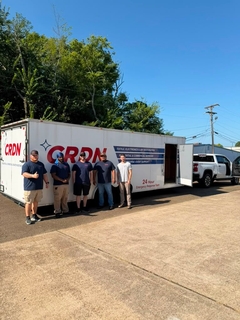
At CRDN Team Crouch, we approach contents packout as a specialized restoration service rather than a conventional moving job. Our objective is to protect valuable contents, maximize restoration opportunities, create detailed documentation, and help homeowners, businesses, contractors, and insurance professionals navigate the recovery process with greater clarity.
For property owners facing a disaster, understanding packout and insurance claims can make the restoration process less confusing and help prevent valuable belongings from being unnecessarily discarded or replaced.
Packout and Insurance Claims: How Professional Contents Packout Supports Recovery
Packout and insurance claims intersect because damaged contents need to be properly identified, documented, protected, and evaluated before restoration or replacement decisions can be made.
A professional contents packout service typically involves:
Assessing the property and contents
Creating a detailed contents inventory
Photographing and documenting affected belongings
Carefully packing and labeling items
Transporting contents to a restoration or storage facility
Cleaning and restoring eligible items
Placing belongings in secure storage when necessary
Returning restored contents through professional pack-back services
The process provides structure during what can otherwise be a chaotic period.
For insurance professionals, detailed documentation can help clarify the scope of the contents loss. For homeowners and businesses, it creates a record of what was removed, where it went, and what happened to it during restoration.
The National Association of Insurance Commissioners (NAIC) recommends maintaining a detailed home inventory, including photographs and descriptions of possessions, to help consumers document their belongings for insurance purposes.
A professional contents inventory essentially brings this documentation principle into the post-loss environment, where hundreds or thousands of individual items may need to be tracked.
What Is an Insurance Packout?
An insurance packout is the professional removal and management of contents from a property affected by a covered or potentially covered loss.
The purpose is not simply to get belongings out of the building.
A properly managed packout is designed to:
Protect contents from additional damage
Document the condition of belongings
Identify restoration opportunities
Create an organized inventory
Provide secure transportation
Facilitate specialized cleaning
Protect contents during structural repairs
Support insurance claim documentation
This distinction is important.
A traditional moving company primarily focuses on transporting possessions safely.
A restoration company handling professional packout services must also understand contamination, damage classification, restoration potential, specialty handling, insurance documentation, and post-loss storage.
For example, a smoke-damaged sofa may require specialized cleaning. A water-exposed laptop may require electronics restoration. A valuable painting may need fine art handling. A family photograph may require document or photograph recovery.
These items cannot simply be treated as ordinary household contents.
Why Contents Should Be Removed After Property Damage
After a disaster, the damaged environment can continue threatening belongings even after the immediate emergency has ended.
Fire and Smoke Damage
Smoke and soot can settle on contents throughout a property, even in areas that were not directly affected by flames.
Potentially affected belongings include:
Furniture
Clothing
Electronics
Artwork
Books
Documents
Kitchenware
Collectibles
Smoke residues can also create persistent odors and contribute to corrosion on sensitive materials.
Water Damage
Water-damaged contents face their own set of risks.
These can include:
Mold growth
Corrosion
Warping
Staining
Swelling
Delamination
Odor development
The U.S. Environmental Protection Agency (EPA) emphasizes the importance of controlling moisture and drying wet materials promptly to reduce the risk of mold growth.
This is one reason emergency packout services can be important following significant water losses.
Removing affected contents from the wet environment allows restoration professionals to stabilize, evaluate, and treat them appropriately.
How Packout Fits Into the Insurance Claims Process
Understanding packout and insurance claims becomes easier when the process is viewed as a series of connected stages.
Stage 1: Property Damage Occurs
A fire, flood, burst pipe, storm, or other event damages the property.
Stage 2: The Property Is Assessed
The restoration team determines the extent of structural and contents damage.
Stage 3: Contents Are Documented
Belongings are inventoried and photographed before removal.
Stage 4: Contents Are Packed Out
Items are carefully removed and transported.
Stage 5: Contents Are Evaluated
Restoration professionals determine which belongings may require cleaning, restoration, specialized treatment, or replacement.
Stage 6: Contents Are Restored and Stored
Eligible items are cleaned and restored, while belongings may remain in climate-controlled storage during structural repairs.
Stage 7: Contents Are Returned
Once the property is ready, restored belongings are transported back through professional pack-back services.
This creates a continuous recovery process rather than treating the packout as an isolated moving task.
The Importance of Contents Inventory
One of the most valuable components of insurance packout services is a detailed contents inventory.
Imagine a four-bedroom home with several hundred belongings affected by smoke and water damage.
Without systematic documentation, it can become difficult to determine:
What was in each room
Which items were damaged
Which items were removed
Which items were restored
Which items remain in storage
Which items were returned
A professional contents inventory provides structure.
Depending on the project, inventory documentation may include:
Item description
Manufacturer
Model
Serial number
Quantity
Room location
Photographs
Condition
Restoration status
For commercial properties, the need for documentation can be even greater.
A business may have thousands of assets ranging from computers and office furniture to retail inventory and specialized equipment.
How Documentation Supports Insurance Claims
Insurance professionals need accurate information to evaluate a property loss.
Professional insurance claim documentation can help answer important questions such as:
What was damaged?
How extensive was the damage?
What can be restored?
What requires specialized treatment?
What remains in storage?
What has already been returned?
A detailed inventory also creates greater transparency between the property owner, restoration company, contractor, and insurance carrier.
This can be especially valuable when a loss involves a large volume of contents.
CRDN Team Crouch uses detailed documentation and organized tracking to help maintain accountability throughout the contents restoration process.
Our approach is designed to make the contents portion of a claim easier to understand, not more complicated.
Packout After Fire Damage
Fire losses frequently require extensive fire damage contents restoration because smoke and soot can affect belongings beyond the area directly impacted by flames.
A property owner may look at a television, sofa, or piece of artwork and assume it is unaffected because it was not burned.
However, smoke exposure can still affect the item.
Potential consequences include:
Soot deposition
Odor absorption
Surface contamination
Corrosion
Discoloration
The National Institute of Standards and Technology (NIST) has examined the effects of fire smoke on electrical equipment, including the potential for smoke deposits to contribute to corrosion and electrical equipment failures.
This illustrates why professional smoke damage restoration should involve more than simply wiping visible soot from surfaces.
Contents may need to be professionally assessed, cleaned, deodorized, or restored before they are considered safe for continued use.
Packout After Water Damage
Water damage presents a different set of restoration challenges.
Common causes include:
Burst pipes
Appliance leaks
Roof leaks
Flooding
Storm damage
Sprinkler discharge
Fire suppression systems
Professional water damage contents restoration focuses on removing affected belongings from the source of moisture and preventing additional deterioration.
The contents may require:
Moisture stabilization
Drying
Cleaning
Decontamination
Corrosion mitigation
Odor treatment
Specialized restoration
The type of water involved also matters.
Floodwater, sewage-contaminated water, and clean water from a broken supply line can create very different restoration requirements.
Professional assessment helps determine the appropriate handling and restoration strategy.
Why Professional Packout Is Different From Moving
A professional restoration packout is fundamentally different from a standard household move.
A mover asks:
"How do we transport these belongings safely?"
A restoration professional must ask:
"What happened to these belongings, what condition are they in, how can we prevent additional damage, and what can be restored?"
That difference affects every stage of the process.
For example:
Electronics
May require anti-static handling and specialized evaluation.
Textiles
May require breathable packaging and specialized textile restoration.
Artwork
May require careful handling, protective materials, and specialty storage.
Documents
May require immediate stabilization and specialized recovery.
Furniture
May require wrapping, moisture control, deodorization, or refinishing.
This is why contents packout services should be performed by professionals experienced in disaster-related contents recovery.
What Happens During a Professional Packout?
Step 1: Assessment
The restoration team evaluates the affected property and identifies contents requiring removal.
Step 2: Documentation
Contents are photographed, inventoried, and categorized.
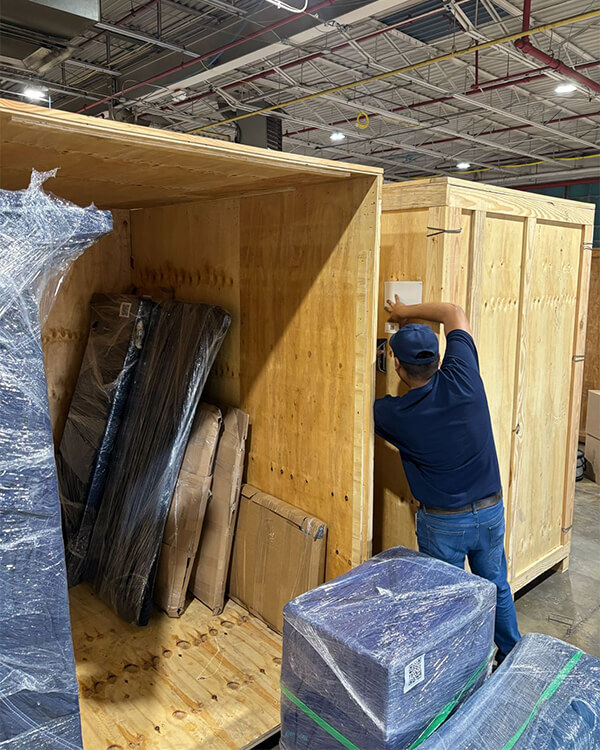
Step 3: Packing
Items are carefully wrapped and packaged according to their material, condition, and handling requirements.
Step 4: Transportation
Contents are transported securely to an appropriate restoration or storage facility.
Step 5: Restoration
Eligible items undergo specialized contents cleaning and restoration.
Step 6: Storage
Contents requiring temporary relocation are placed in secure, appropriate storage.
Step 7: Pack-Back
Once structural repairs are complete, restored belongings are returned to the property.
This structured process is what makes professional packout and insurance claims management so valuable.
What Types of Contents Can Be Restored?
Professional contents restoration may cover a surprisingly broad range of belongings.
Furniture Restoration
Sofas
Chairs
Tables
Cabinets
Wooden furniture
Antique furniture
Textile Restoration
Clothing
Bedding
Drapes
Upholstery
Area rugs
Linens
Electronics Restoration
Computers
Televisions
Gaming systems
Servers
Networking equipment
Security systems
Fine Art Restoration
Paintings
Sculptures
Antiques
Collectibles
Framed artwork
Document Restoration
Photographs
Business records
Legal documents
Historical materials
Important personal records
The restoration strategy depends on the type of material, damage, contamination, and overall condition.
CRDN Team Crouch's Approach to Insurance Packout Services
At CRDN Team Crouch, we believe the best contents recovery strategy is built around three priorities:
Protect. Document. Restore.
We protect belongings by removing them from environments where secondary damage may occur.
We document them through detailed inventory and condition reporting.
We restore them whenever professional evaluation determines that restoration is practical.
Our comprehensive capabilities include:
Insurance packout services
Contents packout services
Emergency packout services
Contents inventory
Contents cleaning and restoration
Fire damage contents restoration
Water damage contents restoration
Smoke damage restoration
Textile restoration
Electronics restoration
Fine art restoration
Document restoration
Climate-controlled storage
Insurance claim documentation
Pack-back services
This integrated approach allows us to support homeowners, businesses, contractors, property managers, and insurance professionals throughout the recovery process.
The Complete Insurance Packout Process
Understanding packout and insurance claims becomes much easier when you know what happens after a restoration company is called.
While every property loss is different, a professional contents packout generally follows a structured sequence designed to protect belongings, document the loss, and prepare contents for restoration.
1. Initial Assessment
The process begins with an inspection of the affected property.
Restoration professionals evaluate:
The source of the damage
The affected areas
The type of contents involved
Environmental conditions
Potential safety concerns
Items requiring immediate stabilization
Contents that may require specialty restoration
This assessment establishes the foundation for the entire contents recovery strategy.
2. Contents Inventory and Documentation
Before items are removed, they are systematically documented.
A professional contents inventory may include photographs, descriptions, room locations, quantities, serial numbers, and condition information.
This documentation helps create a clear record of the contents involved in the loss.
For insurance professionals, it provides useful information when evaluating the contents portion of a claim.
For property owners, it provides greater visibility into what has been removed, restored, stored, and eventually returned.
3. Professional Packing
Once contents have been documented, restoration specialists carefully pack the items.
The packing method depends on the item.
For example:
Electronics may require specialized protective packaging.
Glassware needs cushioning and careful separation.
Artwork may require specialty protection.
Clothing may require appropriate breathable packaging.
Furniture may require protective wrapping.
Fragile collectibles may require custom handling.
This is one of the major differences between professional packout services and conventional moving services.
The objective is not simply transportation.
It is protection from additional damage.
4. Transportation
Contents are transported from the affected property to an appropriate restoration or storage facility.
Professional emergency packout services use organized labeling and tracking to maintain accountability during transportation.
This is particularly important for large losses where hundreds or thousands of items may be involved.
5. Cleaning and Restoration
Once contents reach the restoration facility, eligible belongings can be evaluated for specialized treatment.
Depending on the loss, services may include:
Contents cleaning and restoration
Smoke and soot removal
Water damage restoration
Textile restoration
Electronics restoration
Furniture restoration
Fine art restoration
Document restoration
Odor removal
Not every item requires the same treatment.
A professional restoration approach evaluates each item according to its material, condition, contamination, and restoration potential.
6. Secure Storage
Some contents may need to remain off-site while structural repairs are completed.
Professional climate-controlled storage can protect belongings from:
Humidity
Temperature fluctuations
Dust
Construction debris
Additional water exposure
Unauthorized access
This is particularly valuable for sensitive items such as electronics, textiles, artwork, documents, and wooden furniture.
7. Pack-Back
Once the property has been repaired and is ready for occupancy, restored belongings can be returned.
Professional pack-back services may include:
Transportation back to the property
Inventory verification
Room-by-room placement
Furniture positioning
Final item checks
The goal is to return the property as close as possible to its pre-loss condition.
How Insurance Adjusters Work With Packout Documentation
A professional insurance claim packout can give adjusters more detailed information about the contents portion of a loss.
Depending on the claim, documentation may help establish:
What was affected
Where items were located
What condition they were in
What can potentially be restored
What requires specialty treatment
What remains in storage
What has been returned
This can make communication between the property owner, restoration company, contractor, and insurance professional more organized.
Importantly, a restoration company does not determine insurance coverage. Coverage decisions are governed by the applicable policy and the insurance carrier.
Instead, the restoration company provides factual documentation about the contents and restoration work to help the appropriate parties make informed decisions.
Residential Packout and Insurance Claims
For homeowners, a packout can involve virtually everything inside a property.
A residential insurance packout service may handle:
Furniture
Clothing
Kitchenware
Electronics
Children's belongings
Books
Artwork
Family photographs
Appliances
Collectibles
Important documents
Heirlooms
The financial value of these belongings can be substantial.
But their emotional value can be even greater.
A professional restoration company understands that a family photograph, inherited piece of furniture, or treasured collection cannot necessarily be replaced simply by purchasing something similar.
This is why a restoration-first approach is so important.
Commercial Packout and Insurance Claims
Commercial losses can be significantly more complex.
A business may have hundreds or thousands of assets affected by a single event.
These can include:
Computers
Servers
Networking equipment
Office furniture
Retail inventory
Manufacturing equipment
Medical equipment
Documents
Customer records
Security systems
Specialized tools
Professional commercial packout services provide the organization required to manage large quantities of contents efficiently.
For businesses, the objective is also to minimize operational disruption.
Restoring a computer system, server, or piece of specialized equipment may allow a business to resume operations sooner than waiting for replacement equipment to be sourced, purchased, delivered, and configured.
Why Climate-Controlled Storage Is Important
A property may require extensive reconstruction after a major fire, water, or storm loss.
During that period, leaving contents inside the building can expose them to additional risks.
Construction can generate:
Dust
Drywall particles
Paint fumes
Debris
Temperature fluctuations
Water losses may also leave elevated humidity behind.
Professional climate-controlled storage provides a controlled environment for contents while structural repairs continue.
For sensitive belongings, this can be an important part of protecting the investment already made in restoration.
Packout and Contents Restoration: Why They Work Together
A common misconception is that packout and restoration are two unrelated services.
They are actually closely connected.
A packout creates the opportunity for professional contents restoration to take place in an appropriate environment.
Once contents are removed, specialists can work on them without the limitations of a damaged property.
For example:
A smoke-damaged sofa can be professionally cleaned.
A water-exposed computer can be evaluated for electronics restoration.
A damaged textile can be sent for specialized textile cleaning.
A painting can receive appropriate fine art treatment.
A document can undergo specialized recovery.
The packout therefore becomes the bridge between damage assessment and contents recovery.
Common Mistakes Homeowners and Businesses Should Avoid
1. Throwing Damaged Contents Away Immediately
An item that looks damaged may still be restorable.
Before discarding valuable belongings, allow a professional restoration company to evaluate them.
2. Treating Smoke Damage as Ordinary Dirt
Smoke residues can be chemically complex.
Wiping furniture, electronics, or artwork with household cleaners may cause additional damage.
Professional smoke damage restoration uses material-specific treatment methods.
3. Powering On Water-Damaged Electronics
Attempting to determine whether a wet electronic device still works can cause additional electrical damage.
Leave potentially compromised electronics for professional evaluation.
4. Delaying Contents Removal
The longer belongings remain exposed to moisture, smoke, soot, or other contaminants, the greater the possibility of secondary damage.
Prompt emergency packout services can help stabilize affected contents.
5. Treating a Packout Like a Standard Move
A damaged sofa, wet laptop, antique, and smoke-exposed painting each require different handling.
Restoration knowledge is therefore essential.
6. Failing to Maintain Documentation
A contents loss can become difficult to manage when there is no organized record of affected items.
Professional insurance claim documentation provides a structured record throughout the restoration process.
How CRDN Team Crouch Helps Simplify the Process
At CRDN Team Crouch, we understand that homeowners and businesses don't just need someone to remove boxes from a damaged building.
They need a restoration partner who understands what happens next.
Our approach integrates:
Assessment → Inventory → Packout → Restoration → Storage → Pack-Back
This allows us to provide a coordinated contents recovery solution rather than treating each stage as an isolated service.
Our capabilities include:
Insurance packout services
Contents packout services
Emergency packout services
Contents inventory
Contents cleaning and restoration
Fire damage contents restoration
Water damage contents restoration
Smoke damage restoration
Textile restoration
Electronics restoration
Fine art restoration
Document restoration
Climate-controlled storage
Insurance claim documentation
Pack-back services
Residential contents restoration
Commercial contents restoration
By coordinating these services, CRDN Team Crouch helps property owners protect belongings while giving insurance professionals and restoration contractors better visibility into the contents recovery process.
Frequently Asked Questions About Packout and Insurance Claims
Does insurance pay for a packout?
Coverage depends on the specific insurance policy and circumstances of the loss. Property owners should consult their insurance carrier or adjuster regarding applicable coverage.
A restoration company can provide documentation detailing the contents removal and restoration services performed.
Does everything have to be packed out?
No. The scope of a packout depends on the type and extent of damage, the property's condition, structural repairs, and the restoration requirements for the contents.
A professional assessment determines what should be removed.
Where do belongings go after a packout?
Depending on their condition and restoration needs, belongings may go to a restoration facility, specialty treatment location, or secure climate-controlled storage.
Can damaged belongings be restored instead of replaced?
Often, yes.
Furniture, textiles, electronics, artwork, documents, and other belongings may be candidates for professional restoration.
The appropriate decision depends on the type and severity of damage and the item's restoration potential.
How long does an insurance packout take?
There is no universal timeframe.
A packout can depend on:
Property size
Number of contents
Damage severity
Accessibility
Specialty items
Documentation requirements
Restoration complexity
A small residential loss may be completed considerably faster than a large commercial loss.
Who decides whether an item is covered by insurance?
Insurance coverage is determined according to the applicable policy and the insurance carrier's claims process.
A restoration company provides documentation and restoration information but does not determine policy coverage.
What is pack-back?
Pack-back services are the final stage of the contents restoration process.
Once the property has been repaired and contents restored, belongings are returned, verified against inventory records, and placed back in the appropriate areas.
Why Professional Packout Matters After Property Damage
The relationship between packout and insurance claims ultimately comes down to protection, organization, and recovery.
A professional packout can help:
Protect contents from secondary damage
Create a detailed inventory
Support insurance documentation
Identify restoration opportunities
Reduce unnecessary replacement
Provide secure storage
Improve organization during reconstruction
Simplify the final pack-back process
For homeowners, this can mean preserving possessions they thought were lost.
For businesses, it can mean protecting critical equipment and reducing operational downtime.
For insurance professionals, it can mean having clearer information about the contents portion of a claim.
CRDN Team Crouch: Protecting What Matters After Disaster
When fire, water, smoke, or storm damage affects a property, the recovery process can feel overwhelming.
CRDN Team Crouch brings structure and expertise to the contents portion of that recovery.
From the first inventory to the final pack-back, our team focuses on protecting belongings, documenting their condition, maximizing restoration opportunities, and maintaining accountability throughout the process.
We serve homeowners, businesses, contractors, property managers, and insurance professionals throughout Ark-La-Tex, Memphis, Little Rock, Northwest Houston, and Southwest Houston.
Our restoration philosophy is straightforward:
Don't automatically replace what can be professionally restored.
A damaged item deserves the opportunity to be evaluated before it is considered a total loss.
Understanding packout and insurance claims is important for anyone facing fire, water, smoke, or storm damage.
A professional contents packout is much more than moving possessions to another location. It is a coordinated restoration process involving inventory, documentation, careful handling, transportation, cleaning, restoration, secure storage, and pack-back.
When performed correctly, the process can help protect belongings from secondary damage, identify restoration opportunities, support insurance documentation, and reduce unnecessary replacement.
At CRDN Team Crouch, we combine contents restoration expertise with specialized packout services to help families and businesses recover what matters most.
Whether you're dealing with a residential fire, commercial water loss, smoke contamination, or storm-related property damage, our team can help you understand the contents recovery process and determine the appropriate next steps.
Don't assume your damaged belongings are beyond saving.
Let CRDN Team Crouch evaluate, document, protect, and restore them.
Call CRDN Team Crouch: (903) 908-1919
Visit: www.crdntx.com
CRDN Team Crouch — Restoring More Than Property. Protecting What Matters Most.
Categories
Recent Posts
-
October 15, 2026
Insurance Packout: How Professional Contents Restoration Protects Your Belongings During an Insurance Claim
-
October 13, 2026
Items Affected by Fire and Water Damage: What Can Be Restored and What Must Be Replaced?
-
October 8, 2026
Fire Damage Restoration: How Professional Restoration Can Save Your Home and Belongings After a Fire