Bronze Restoration: How to Clean, Repair, and Preserve Bronze Sculptures and Valued Objects After Damage
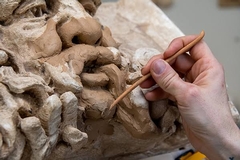
Bronze restoration is an important part of preserving valuable sculptures, decorative objects, memorials, plaques, and other bronze belongings affected by corrosion, environmental exposure, fire, smoke, or water damage. Although bronze is a durable metal, it is not immune to deterioration. Over time, moisture, pollutants, improper cleaning, and physical damage can affect its appearance, surface finish, and structural condition.
For homeowners, collectors, businesses, and property managers, discovering that a valuable bronze object has been damaged can raise an important question: Can it be restored, or does it need to be replaced?
In many cases, bronze objects can be preserved through appropriate assessment, conservation, and restoration. However, the correct treatment depends on the object's age, composition, existing patina, previous coatings, and extent of damage.
Not every bronze object should be cleaned or polished in the same way. A modern bronze decorative piece, an antique sculpture, and a historic bronze memorial may require very different approaches.
At CRDN Team Crouch, we understand that valuable contents can extend beyond everyday household belongings. Artwork, sculptures, decorative objects, and other specialty contents may require careful handling and an appropriate restoration pathway after property damage.
This guide explains what bronze restoration involves, common causes of bronze deterioration, how damaged bronze objects can be preserved, and what property owners should consider before attempting to clean or repair them.
If your property has experienced damage affecting valuable contents or artwork, contact CRDN Team Crouch at (903) 908-1919 to discuss your contents restoration needs.
What Is Bronze Restoration?
Bronze restoration is the process of assessing, cleaning, stabilising, repairing, and preserving bronze objects that have deteriorated or sustained damage.
Bronze is a metal alloy primarily made from copper and tin, although its exact composition can vary. It has been used for centuries to produce sculptures, monuments, decorative objects, architectural features, plaques, and works of art.
Its durability makes it suitable for both indoor and outdoor use. However, exposure to moisture, atmospheric pollutants, salts, chemicals, and unsuitable cleaning products can affect its surface over time.
Professional bronze restoration may involve:
- Assessing the condition of the bronze.
- Identifying corrosion and surface deterioration.
- Evaluating the existing patina and protective coatings.
- Removing harmful surface deposits where appropriate.
- Addressing localised corrosion.
- Repairing physical damage where technically appropriate.
- Applying suitable protective coatings.
- Recommending ongoing maintenance and preservation.
The objective is not necessarily to make the bronze look brand new. In conservation, preserving the object's original appearance, surface characteristics, and historical integrity is often more important than achieving a polished finish.
This distinction matters particularly for antique bronze sculptures and historically significant objects.
What Causes Bronze to Deteriorate?
Although bronze is relatively durable, several environmental and physical factors can contribute to deterioration.
Understanding these causes helps property owners recognise when an object needs professional assessment.
1. Moisture and Water Exposure
Moisture is one of the most common contributors to bronze corrosion.
When bronze is repeatedly exposed to water, humidity, or damp conditions, chemical reactions can occur on its surface. Over time, these reactions may produce corrosion deposits and changes in colour.
Water exposure may result from:
- Flooding or water intrusion.
- Roof leaks.
- Plumbing failures.
- Prolonged outdoor exposure.
- Poor storage conditions.
- Condensation and high humidity.
For indoor bronze sculptures and decorative objects, water damage may also affect associated materials such as wooden bases, fabric coverings, display cases, and mounting components.
The extent of the damage depends on how long the object was exposed and the conditions surrounding it.
2. Environmental Pollution
Outdoor bronze sculptures are constantly exposed to environmental conditions.
Airborne pollutants, industrial emissions, airborne salts, and acidic rainfall can contribute to surface deterioration.
Over time, these conditions may cause uneven colour changes, staining, and corrosion.
The National Park Service explains in its technical guidance on conserving outdoor bronze sculpture that environmental exposure can contribute to corrosion and that aggressive cleaning methods may damage original surface details.
This is one reason bronze restoration requires more than simply removing visible dirt.
3. Improper Cleaning and Polishing
One of the most common mistakes people make when caring for bronze is assuming that polishing always improves its condition.
In reality, aggressive polishing can remove original patina, alter the surface texture, and reduce fine details.
Some bronze objects are intentionally coloured during production. Their surface finish may be an important part of the artist's original design.
Using abrasive materials, harsh chemicals, or unsuitable metal cleaners can permanently change that appearance.
The Canadian Conservation Institute's guidance on caring for metal objects explains the importance of distinguishing stable patinas from active corrosion and selecting cleaning methods that protect the object's original surface.
4. Physical Damage
Bronze objects can also deteriorate through physical damage.
Common examples include:
- Cracks and fractures.
- Broken limbs or decorative components.
- Loose joints.
- Damaged mounting points.
- Structural instability.
- Surface abrasions and scratches.
- Damage caused by impact or mishandling.
For sculptures, physical damage can affect both appearance and stability.
A bronze statue with a loose component or structural crack should be assessed before anyone attempts to clean, move, or repair it.
5. Poor Storage Conditions
Bronze objects kept in unsuitable environments may deteriorate faster than expected.
Excessive humidity, direct contact with incompatible materials, chemical exposure, and inadequate protection can all contribute to damage.
Proper storage and handling are particularly important for antique bronze objects, collectible sculptures, and valuable decorative pieces.
What Is Bronze Patina, and Should It Be Removed?
One of the most misunderstood aspects of bronze restoration is patina.
Patina refers to the surface layer that develops on bronze through chemical reactions, environmental exposure, or intentional treatment during production.
It can appear in different colours, including:
- Brown.
- Dark bronze.
- Green.
- Blue-green.
- Black.
- Reddish-brown.
Some bronze objects are deliberately treated to develop a particular patina because it contributes to their artistic appearance.
For example, a sculptor may intentionally create a dark brown or green surface to achieve a specific visual effect.
Natural patination can also develop over time as bronze reacts with its environment.
Should bronze patina be removed during restoration?
Not necessarily.
A stable, historically significant, or intentionally applied patina may be an important part of the object's value and identity.
Removing it through aggressive cleaning or polishing can permanently alter the sculpture.
The important distinction is between a stable surface patina and active corrosion that may be damaging the underlying metal.
A qualified metal conservator can assess the surface and recommend whether cleaning, stabilisation, or further treatment is appropriate.
Bronze Restoration After Fire, Smoke, and Water Damage
Bronze objects can also be affected during major property damage incidents.
Although bronze is not combustible in the same way as wood, fabric, or plastic, exposure to fire, smoke, water, and the conditions surrounding a disaster can still affect its surface and associated components.
Fire Damage to Bronze Sculptures
High temperatures may affect the appearance of bronze and the materials associated with it.
Depending on the exposure, a bronze sculpture may experience:
- Surface discolouration.
- Changes to existing coatings.
- Damage to decorative finishes.
- Cracking or deterioration of associated materials.
- Structural problems in complex assemblies.
The impact of heat depends on the temperature reached, duration of exposure, alloy composition, and construction of the object.
A fire-damaged bronze sculpture should be assessed before cleaning or attempting repairs.
Smoke and Soot Contamination
Smoke can spread throughout a property and leave residues on valuable contents, including bronze sculptures and decorative objects.
Soot and smoke deposits may settle on surfaces, leaving dark residues and unpleasant odours in the surrounding environment.
Cleaning must be approached carefully because soot removal methods that are suitable for one surface may damage another.
Bronze objects with delicate patinas, painted finishes, gilding, or protective coatings require particular attention.
Water Damage and Bronze Corrosion
Water exposure can contribute to corrosion, especially when moisture remains trapped in recesses, joints, hollow sections, or beneath existing coatings.
Floodwater may also introduce contaminants that leave deposits on the surface.
Where a bronze sculpture has a wooden base, fabric covering, or mixed-material construction, water damage may affect several components simultaneously.
This is why the entire object should be assessed rather than focusing exclusively on the visible bronze surface.
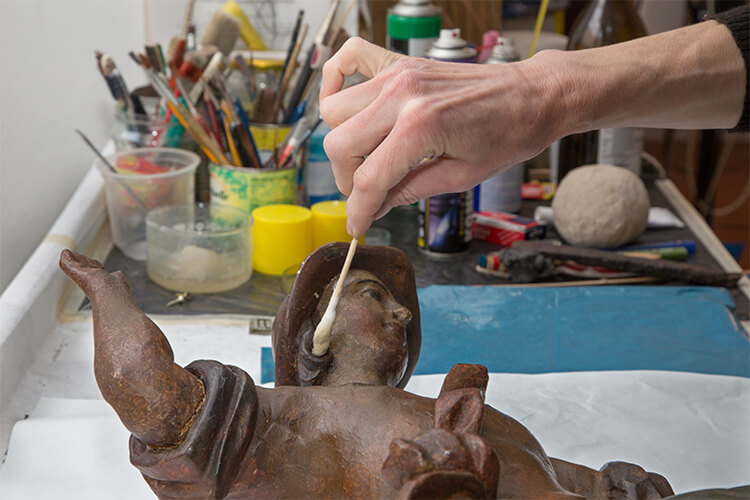
How Professional Bronze Restoration Works
The appropriate restoration process depends on the condition, age, composition, and intended appearance of the object.
However, a professional conservation process generally involves several stages.
Step 1: Condition Assessment
The first step is understanding the object's current condition.
A specialist examines the bronze for:
- Surface corrosion.
- Existing patina.
- Cracks and fractures.
- Loose or missing components.
- Previous repairs.
- Existing wax, lacquer, or protective coatings.
- Evidence of smoke, soot, or water damage.
Photographs and condition records may also be created to document the object's appearance before treatment.
This information helps determine the safest and most appropriate restoration approach.
Step 2: Identification of Existing Surface Treatments
Before cleaning begins, the conservator needs to understand whether the bronze has an artificial patina, protective coating, paint, lacquer, gilding, or evidence of previous restoration.
This is important because some cleaning products and techniques can remove or damage these finishes.
A treatment that may be suitable for an untreated outdoor bronze statue could be inappropriate for an antique decorative object with a delicate surface coating.
Step 3: Cleaning and Surface Treatment
Cleaning aims to remove unwanted deposits without unnecessarily disturbing the original surface.
Depending on the object's condition, a specialist may use carefully selected mechanical or chemical methods.
Treatment decisions should be informed by examination and controlled testing.
The objective is to remove harmful deposits while retaining important surface characteristics.
Aggressive sanding, polishing, and uncontrolled chemical treatment should be avoided.
Step 4: Corrosion Treatment
If active corrosion is identified, the conservator determines whether it requires treatment.
Not every green or brown surface deposit represents an immediate threat to the object.
Some corrosion products form stable patinas, while other forms may indicate continuing deterioration.
The treatment approach must reflect the type, location, and severity of corrosion.
Step 5: Repairing Physical Damage
Where the bronze has cracks, fractures, loose components, or structural problems, appropriate repairs may be required.
The repair method depends on the construction of the object and the nature of the damage.
Historic and valuable sculptures may require specialist metal conservation skills to preserve original details and avoid introducing additional damage.
Step 6: Protective Coating
After appropriate cleaning and treatment, a protective coating may be applied where suitable.
Wax and lacquer coatings are commonly used in bronze conservation to help protect surfaces against environmental exposure.
However, the correct coating depends on the existing finish, location, and conservation requirements.
Protective coatings also require maintenance. They do not permanently prevent corrosion or eliminate the need for future inspection.
Step 7: Final Inspection and Preservation Recommendations
The final stage involves reviewing the object's condition and identifying any ongoing maintenance requirements.
Recommendations may cover:
- Appropriate cleaning frequency.
- Suitable storage conditions.
- Humidity management.
- Protection from pollutants.
- Handling procedures.
- Periodic inspection.
- Maintenance of protective coatings.
The goal is to preserve the object beyond the immediate restoration process.
Can Antique Bronze Sculptures Be Restored?
Yes, many antique bronze sculptures can undergo conservation and restoration, depending on their condition.
However, antique bronze objects require particular care because their value may be connected to their age, craftsmanship, original finish, historical significance, and previous restoration history.
A sculpture that appears dull or discoloured may not necessarily need polishing.
Its surface may contain an original patina or historical treatment that should be preserved.
Before attempting to clean an antique bronze object, consider:
- Its age and possible historical significance.
- Whether the patina is original or developed over time.
- Whether previous repairs or coatings are present.
- Whether there are signs of active corrosion.
- Whether the object has structural damage.
- Whether a specialist metal conservator should assess it.
For valuable antique pieces, conservation should prioritise preservation rather than cosmetic improvement.
Bronze Restoration vs. Bronze Cleaning: What Is the Difference?
Although the terms are sometimes used interchangeably, bronze restoration and bronze cleaning are not the same.
| Bronze Cleaning | Bronze Restoration |
|---|---|
| Focuses on removing surface dirt and deposits. | Addresses broader deterioration and damage. |
| May involve routine maintenance. | May involve assessment, stabilisation, and repair. |
| Usually addresses surface appearance. | Considers appearance, condition, and preservation. |
| May be suitable for certain well-maintained objects. | Often requires specialist conservation expertise. |
| Does not necessarily address structural problems. | May include appropriate structural treatment. |
A bronze object with ordinary surface dirt may need routine maintenance.
However, a sculpture with active corrosion, damaged patina, cracks, or failed protective coatings requires a more comprehensive assessment.
Knowing the difference helps property owners avoid unnecessary treatments that may damage valuable objects.
Common Mistakes to Avoid When Restoring Bronze
Attempting to restore bronze without understanding its composition and surface condition can cause irreversible damage.
Here are some mistakes to avoid.
1. Using abrasive materials: Steel wool, rough brushes, and abrasive pads can scratch the surface and remove original patina.
2. Applying household metal polish: Products designed for ordinary metal surfaces may be unsuitable for antique or patinated bronze.
3. Removing all green discolouration: Some green patinas are stable and may form part of the object's intended appearance.
4. Using harsh chemicals: Unsuitable chemicals can damage coatings, alter colours, or create further deterioration.
5. Applying wax without assessing existing coatings: A new protective coating may not be compatible with the object's previous treatment.
6. Ignoring structural damage: Cracks, loose components, and unstable mounting points should be assessed before the object is handled or cleaned.
7. Attempting DIY restoration on valuable sculptures: Antique, historic, and valuable bronze objects should be assessed by a qualified conservator before intervention.
How CRDN Team Crouch Supports Contents Restoration After Property Damage
When a property experiences fire, smoke, or water damage, the recovery process often involves more than structural repairs.
Valuable belongings, including artwork, sculptures, decorative objects, and specialty contents, may also require attention.
CRDN Team Crouch supports contents restoration needs by helping property owners manage affected belongings as part of the wider recovery process.
Depending on the incident and scope of work, this may involve:
Contents assessment and organisation: Identifying affected belongings and helping establish which items require further attention.
Inventory and documentation: Recording damaged contents to support the recovery process and provide useful information for insurance discussions.
Contents packout coordination: Helping organise the careful handling, packing, and movement of affected belongings where off-site assessment, restoration, or storage is appropriate.
Restoration coordination: Supporting the appropriate restoration pathway for affected contents, including identifying when specialist treatment may be necessary.
Storage and pack-back: Helping manage belongings during property repairs and supporting their organised return when the property is ready.
It is important to recognise that bronze conservation is a specialist discipline. Antique sculptures, historic monuments, and valuable bronze artwork may require a qualified metal conservator. CRDN Team Crouch's role in a wider contents restoration project should be understood in terms of the appropriate scope of work and specialist requirements.
Have valuable artwork, sculptures, or other contents been affected by property damage?
Contact CRDN Team Crouch at (903) 908-1919 to discuss your contents restoration needs.
Frequently Asked Questions About Bronze Restoration
1. What is bronze restoration?
Bronze restoration is the process of assessing, cleaning, treating, repairing, and preserving bronze objects affected by corrosion, physical damage, environmental exposure, or other forms of deterioration.
2. Can a green bronze statue be restored?
Yes, but green discolouration does not automatically mean the statue needs restoration. Some green patinas are stable and may be part of the sculpture's original or naturally developed appearance. A conservator should assess the surface before treatment.
3. How do you remove corrosion from bronze?
Corrosion treatment depends on the type and severity of deterioration. A specialist may use carefully selected cleaning or stabilisation methods following examination and testing. Aggressive polishing and uncontrolled chemical treatment should be avoided.
4. Can fire-damaged bronze sculptures be restored?
Some fire-affected bronze sculptures may be suitable for conservation or restoration. The outcome depends on heat exposure, surface condition, structural damage, and the condition of any associated materials.
5. Can water damage affect bronze sculptures?
Yes. Water exposure can contribute to corrosion, particularly where moisture remains trapped in joints, recesses, hollow sections, or beneath protective coatings.
6. Should antique bronze sculptures be polished?
Not without first assessing their surface. Polishing can remove original patina, alter historical finishes, and reduce fine details. Antique bronze objects should be handled according to their conservation requirements.
7. How often should bronze sculptures be maintained?
Maintenance frequency depends on the object's location, environment, surface treatment, and exposure to moisture and pollutants. Outdoor sculptures may require periodic inspection and renewal of protective coatings.
8. Is bronze restoration expensive?
Costs vary depending on the object's size, condition, value, complexity, and the treatment required. A simple cleaning assessment will generally involve different work from repairing a structurally damaged or historically significant sculpture.
9. Can bronze sculptures be restored after smoke damage?
Some smoke-affected bronze surfaces may be suitable for careful cleaning. However, soot deposits, existing coatings, and delicate patinas must be assessed before treatment.
10. Who should restore a valuable bronze sculpture?
A qualified metal conservator with experience in bronze objects is generally the appropriate specialist for valuable, antique, or historically significant sculptures. A contents restoration provider can help manage the wider recovery process when the object has been affected by property damage.
Protect Your Valuable Contents With the Right Restoration Approach
Bronze sculptures, statues, decorative objects, and architectural features can retain significant financial, artistic, and sentimental value.
Although bronze is a durable material, corrosion, environmental exposure, improper cleaning, and property damage can affect its condition.
The most important step is understanding that bronze restoration is not simply about making an object shine. It is about preserving its original character, addressing deterioration, and selecting treatments that protect its long-term condition.
Whether you are managing the aftermath of a fire, water incident, or another property emergency, valuable contents should receive appropriate assessment before cleaning, disposal, or replacement decisions are made.
At CRDN Team Crouch, we understand the importance of managing contents recovery carefully and identifying when specialist restoration support is needed.
Have your valuable contents been affected by fire, smoke, or water damage?
Call CRDN Team Crouch today at (903) 908-1919 to discuss your contents restoration needs.
Visit www.crdntx.com to learn more about our contents restoration services.
Categories
Recent Posts
-
November 19, 2026
Bronze Restoration: How to Clean, Repair, and Preserve Bronze Sculptures and Valued Objects After Damage
-
November 17, 2026
Textile Restoration Services Across Arkansas, Louisiana, Tennessee, and Texas: Where to Get Help for Fire, Smoke, and Water-Damaged Fabrics
-
November 12, 2026
Textile Restoration: Can Fire, Smoke, and Water-Damaged Fabrics Really Be Saved?