Electronic Restoration: How Professionals Recover Fire, Water, Smoke, and Power-Damaged Electronics
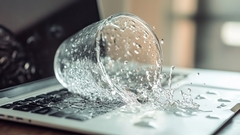
Electronic restoration can make the difference between unnecessarily replacing expensive technology and successfully recovering valuable equipment after a disaster. When fire, water, smoke, storms, power surges, or other environmental events damage electronic equipment, the first instinct is often to assume the device is beyond repair.
That assumption can be costly.
Computers, servers, televisions, networking equipment, security systems, medical devices, office technology, manufacturing controls, and personal electronics can represent thousands or even hundreds of thousands, of dollars in combined replacement costs. Some devices also contain information that cannot simply be purchased again.
Professional electronic restoration provides a systematic alternative.
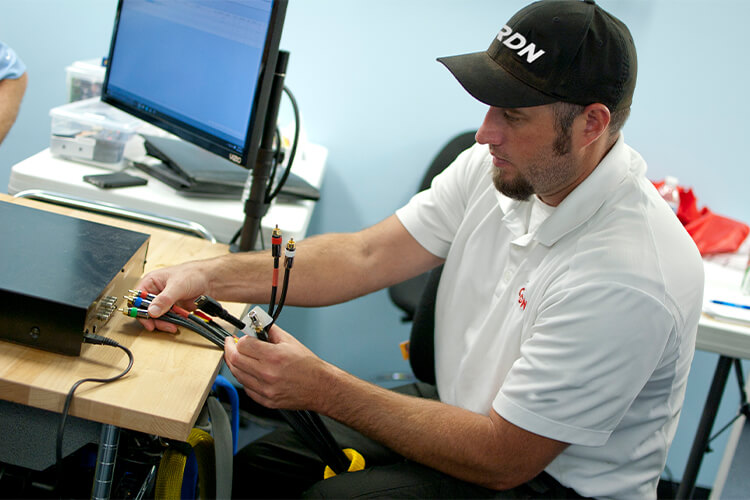
Instead of immediately discarding damaged equipment, trained restoration professionals assess the extent of the damage, document the equipment, stabilize it, remove contaminants, address corrosion, perform specialized cleaning, and determine whether the equipment can be safely returned to service.
For homeowners, this can mean saving valuable personal technology and irreplaceable data. For businesses, it can mean reducing downtime and protecting critical operational equipment.
At CRDN Team Crouch, electronic restoration is part of a broader contents recovery strategy designed to protect valuable property after disaster. Our approach combines detailed contents inventory, professional packout, specialized restoration coordination, secure storage, documentation, and pack-back services to help property owners and insurance professionals make informed restoration-versus-replacement decisions.
The need for specialized recovery is supported by research from the National Institute of Standards and Technology (NIST) , which has documented how smoke deposition can contribute to corrosion and electrical equipment failures.
Whether electronics have been exposed to a residential fire, commercial water loss, storm damage, or smoke contamination, professional evaluation should occur before valuable equipment is written off as a total loss.
Electronic Restoration: What Is It and Why Does It Matter?
Electronic restoration is the professional process of evaluating, cleaning, decontaminating, stabilizing, testing, and recovering electronic equipment affected by a disaster.
It differs from ordinary electronics repair.
A traditional repair technician may primarily diagnose a malfunctioning component and replace it.
An electronic restoration specialist must first determine why the equipment failed or was exposed to damage and whether contaminants or environmental conditions could cause additional deterioration.
Professional electronic restoration services may address:
Water damage
Smoke contamination
Soot exposure
Fire-related damage
Corrosion
Power surge damage
Storm-related damage
Humidity
Contaminated environments
Fire suppression water
The objective is not simply to make a device turn on.
The objective is to determine whether the equipment can be safely and reliably restored.
This distinction is critical because some electronic damage is immediately visible while other damage develops over time.
Why Damaged Electronics Should Be Evaluated Before Replacement
One of the most expensive mistakes following a disaster is assuming that every affected electronic device must be replaced.
A device may look damaged externally but have recoverable internal components. Conversely, a device that looks fine may have contamination or corrosion developing internally.
Professional evaluation helps distinguish between the two.
A restoration assessment may consider:
Type of damage
Source of contamination
Duration of exposure
Environmental conditions
Equipment construction
Internal contamination
Corrosion
Electrical condition
Restoration feasibility
Replacement cost
This approach can be particularly valuable when an affected property contains large quantities of electronic equipment.
For example, a business experiencing water intrusion may have dozens of computers, monitors, networking devices, printers, servers, and other technology affected simultaneously.
Replacing everything immediately could create enormous costs.
Professional electronic restoration provides an opportunity to determine what can realistically be recovered.
How Fire and Smoke Damage Electronics
Fire damage is not limited to electronics that come into direct contact with flames.
Smoke can travel throughout a building and deposit contaminants on equipment located far from the original fire.
Smoke-damaged electronics may experience:
Soot deposits
Corrosion
Contamination of circuit boards
Electrical contact problems
Odor
Fan and ventilation contamination
Delayed component failure
NIST's research into fire smoke and electrical equipment identifies smoke deposition and corrosion as important mechanisms associated with electronic equipment damage. National Institute of Standards and Technology (NIST) research
This is why smoke-damaged electronics should not simply be wiped down with household cleaners.
The contaminants may have entered the equipment through:
Cooling fans
Vents
Openings
Ports
Connectors
Power supplies
Professional smoke damage restoration focuses on removing contamination while minimizing additional damage to sensitive components.
Water-Damaged Electronics Require Immediate Attention
Water is another major threat to electronic equipment.
Common causes include:
Burst pipes
Roof leaks
Flooding
Appliance failures
Storm damage
Sprinkler discharge
Fire suppression efforts
Plumbing failures
When water enters an electronic device, it can create several problems at once.
Corrosion
Moisture can cause metal components and connections to corrode.
Short Circuits
If electrical power is present while water is inside equipment, short circuits may occur.
Mineral Deposits
Water can leave behind minerals and contaminants after evaporation.
Contamination
Floodwater can introduce dirt, chemicals, microorganisms, and other contaminants into equipment.
Long-Term Failure
A device may initially appear functional but develop failures later as corrosion progresses.
Professional water damaged electronics restoration therefore involves much more than drying.
The equipment must be properly evaluated, stabilized, cleaned, and tested.
Never Assume "Dry" Means "Restored"
One of the most common misconceptions about electronic restoration is that once a device dries, it is safe to use.
Drying removes moisture.
It does not necessarily remove:
Minerals
Dirt
Corrosive residues
Smoke particles
Biological contaminants
Chemical residues
This is particularly important after flood exposure.
The Federal Emergency Management Agency (FEMA) documents the difficulty of recovering from water exposure and notes that prolonged exposure, including saltwater exposure, can contribute to corrosion in electrical systems.
For this reason, professional electronics restoration services evaluate the equipment beyond its external appearance.
What Types of Electronics Can Be Restored?
Modern homes and businesses contain an enormous variety of electronic equipment.
Computers and Laptops
Computers may contain:
Personal photographs
Business records
Financial information
Customer databases
Software
Project files
Intellectual property
Professional computer restoration focuses on equipment recovery while recognizing the importance of the information stored within it.
Servers and Networking Equipment
For businesses, servers and network infrastructure can be mission-critical.
Equipment may include:
Servers
Network switches
Routers
Firewalls
Storage systems
Backup equipment
Communication systems
Professional server restoration can help businesses determine which systems may be recoverable and which require replacement.
Televisions and Home Entertainment Systems
Residential electronics restoration may also include:
Televisions
Gaming consoles
Audio equipment
Home theater systems
Streaming devices
Speakers
These items may be affected by smoke, soot, water, or fire suppression efforts.
Security and Smart Home Systems
Modern properties increasingly depend on electronic security.
Examples include:
Security cameras
Alarm systems
Access-control systems
Smart locks
Doorbell cameras
Smart thermostats
Home automation hubs
Damage to these systems can affect both convenience and security.
Commercial and Industrial Equipment
Businesses may also have specialized electronic systems such as:
Manufacturing controls
Medical equipment
Point-of-sale systems
Telecommunications equipment
Laboratory equipment
Audio-visual systems
Building automation controls
These assets can be expensive and difficult to replace quickly, making commercial electronics restoration an important component of disaster recovery.
The Professional Electronic Restoration Process
Professional electronic restoration follows a structured process.
1. Initial Assessment
The first step is identifying what happened.
Restoration professionals evaluate:
Source of damage
Exposure type
Duration
Environmental conditions
Visible damage
Equipment condition
This establishes the basis for the restoration strategy.
2. Contents Inventory and Documentation
Every affected device should be properly documented.
A professional contents inventory may include:
Manufacturer
Model
Serial number
Asset number
Location
Photographs
Condition
Restoration status
This documentation is valuable for both restoration management and insurance claims.
It also provides accountability throughout the process.
3. Professional Electronics Packout
Once equipment is documented, affected electronics may be removed from the property.
Professional electronics packout services are designed to minimize additional damage during handling and transportation.
Equipment may require:
Protective packaging
Anti-static protection
Shock protection
Moisture protection
Individual labeling
Secure transportation
This is different from a standard household move because the equipment may already be compromised.
4. Stabilization
Stabilization is designed to prevent the damage from progressing.
Depending on the circumstances, this may involve:
Controlled environmental conditions
Moisture management
Contamination isolation
Corrosion mitigation
Secure storage
The specific treatment depends on the equipment and nature of the loss.
5. Specialized Cleaning
The cleaning process varies according to the type of contamination.
Potential techniques may include:
Precision cleaning
Specialized surface cleaning
Circuit-board cleaning
Removal of smoke residues
Contamination removal
Corrosion treatment
The objective is to remove damaging contaminants without introducing new damage.
6. Testing and Evaluation
Following cleaning and stabilization, equipment may undergo diagnostic testing.
Testing can help determine:
Whether the equipment operates correctly
Whether components remain compromised
Whether additional treatment is required
Whether restoration is technically practical
A device should not be considered successfully restored simply because it powers on.
7. Secure Storage
Restored electronics may need to remain off-site while structural repairs continue.
Professional climate-controlled storage helps protect equipment from:
Humidity
Dust
Temperature extremes
Construction debris
Additional environmental exposure
This is especially important for sensitive electronic equipment.
8. Return and Pack-Back
After structural repairs are completed, restored equipment can be returned to the property.
Professional pack-back services help ensure that equipment is:
Returned to the correct location
Matched against inventory records
Handled carefully
Properly documented
This completes the contents restoration cycle.
Electronic Restoration and Insurance Claims
Professional electronic restoration services can also play an important role in the insurance claims process.
Insurance professionals may need to determine whether damaged equipment should be:
Restored
Repaired
Replaced
Declared non-restorable
A detailed restoration assessment gives the relevant parties better information for making those decisions.
CRDN Team Crouch supports this process through:
Contents inventory
Photography
Equipment documentation
Condition reporting
Restoration coordination
Packout documentation
Storage tracking
Pack-back documentation
This organized approach can help reduce uncertainty during complex contents claims.
Electronic Restoration Can Reduce Unnecessary Replacement
Restoration can provide an important financial advantage.
Consider a commercial office with:
25 computers
10 monitors
Several network switches
Printers
Security equipment
Servers
Replacing every device immediately could create substantial expenses.
A professional evaluation may reveal that some equipment can be restored while other items require replacement.
This restoration-versus-replacement approach can help property owners and insurance professionals make decisions based on actual equipment condition rather than assumptions.
Electronic Restoration and Sustainability
There is also an environmental argument for restoring electronics when practical.
The U.S. Environmental Protection Agency emphasizes reuse, refurbishment, and responsible management as important elements of sustainable electronics stewardship. U.S. EPA: Electronics Basic Information, Research, and Initiatives
Restoring usable equipment can:
Extend product life
Reduce unnecessary electronic waste
Preserve embedded resources
Reduce the demand for replacement equipment
When restoration is not technically or economically appropriate, responsible recycling becomes the next consideration.
The goal is not to restore everything regardless of condition.
The goal is to make the right recovery decision for each piece of equipment.
Residential Electronic Restoration
A disaster can affect technology that families depend on every day.
Professional residential electronic restoration may help recover:
Computers
Laptops
Televisions
Gaming consoles
Tablets
Home security systems
Wi-Fi equipment
Smart home devices
Audio systems
Appliances
For homeowners, the value of restoration may extend beyond the device itself.
A computer may contain years of family photographs.
A phone may contain irreplaceable memories.
A home server may contain important records.
This is why professional evaluation is worth considering before replacement.
Commercial Electronic Restoration
For businesses, electronic damage can quickly become an operational emergency.
Professional commercial electronics restoration can help address equipment used for:
Communications
Data storage
Manufacturing
Security
Healthcare
Retail
Administration
Customer service
The objective is to restore critical equipment whenever feasible while helping businesses minimize interruption.
For a business recovering from a major loss, restoring even a portion of essential technology can help accelerate the return to normal operations.
Common Mistakes After Electronics Are Damaged
Turning Equipment On
Do not assume a wet or smoke-contaminated device is safe simply because it appears dry.
Professional evaluation should occur before attempting to power potentially compromised equipment.
Using a Hair Dryer
High heat can damage sensitive components and does not address contamination inside equipment.
Using Household Cleaning Products
Improper chemicals can damage coatings, plastics, circuit boards, connectors, and other components.
Placing Electronics in Rice
Rice does not remove internal contamination or corrosion and should not be considered a professional restoration method.
Discarding Equipment Immediately
A device that appears damaged may still have restoration potential.
Professional evaluation should occur before valuable equipment is written off.
Why CRDN Team Crouch Is a Trusted Electronic Restoration Partner
Successful electronic restoration requires more than technical knowledge.
It requires:
Rapid response
Careful documentation
Specialized handling
Restoration expertise
Secure storage
Insurance coordination
Attention to detail
CRDN Team Crouch brings these elements together through a comprehensive contents restoration process.
Our capabilities include:
Electronic restoration
Electronics restoration services
Fire-damaged electronics recovery
Water-damaged electronics restoration
Smoke-damaged electronics restoration
Power surge damage assessment
Computer restoration
Server restoration
Commercial electronics restoration
Residential electronics restoration
Emergency electronic restoration
Electronics packout services
Contents inventory
Insurance documentation
Climate-controlled storage
Pack-back services
Our approach is simple: protect first, document thoroughly, restore whenever practical, and return contents safely.
Frequently Asked Questions About Electronic Restoration
What is electronic restoration?
Electronic restoration is the professional process of assessing, stabilizing, cleaning, decontaminating, testing, and recovering electronic equipment damaged by fire, water, smoke, power events, or other disasters.
Can fire-damaged electronics be restored?
Potentially. Electronics that have not experienced direct thermal destruction may sometimes be restored after smoke and soot contamination. Professional evaluation is necessary to determine restoration feasibility.
Can water-damaged electronics be saved?
Many types of water-damaged electronics may be candidates for restoration, depending on the equipment, type of water, duration of exposure, contamination, and extent of corrosion.
Should I turn on electronics after water damage?
No. Attempting to power compromised equipment can worsen electrical damage. Have the equipment professionally evaluated first.
Is smoke damage harmful to electronics?
Yes. Smoke can deposit corrosive contaminants on electronic components and may contribute to delayed failures.
Is electronic restoration cheaper than replacement?
It can be, depending on the equipment and damage. Professional evaluation allows property owners and insurance professionals to compare restoration and replacement based on the actual condition of the equipment.
Does insurance cover electronic restoration?
Coverage depends on the policy and cause of loss. CRDN Team Crouch can provide documentation and restoration information to support the contents portion of an insurance claim.
How quickly should electronic restoration begin?
As soon as it is safe to do so. Prompt stabilization can help limit secondary damage, particularly when equipment has been exposed to moisture or corrosive smoke residues.
Don't Assume Damaged Electronics Are Beyond Saving
When fire, water, smoke, storms, or power events damage electronic equipment, replacing everything may seem like the simplest solution.
It is not always the best one.
Professional electronic restoration provides homeowners, businesses, and insurance professionals with another option: evaluate the equipment, stabilize it, remove contaminants, test it, and determine whether it can be safely returned to service.
That approach can help preserve valuable technology, reduce unnecessary replacement, minimize business downtime, protect important information, and reduce electronic waste.
At CRDN Team Crouch, we understand that electronics are often essential to the way people live and businesses operate. Our contents restoration approach is designed to protect these assets from the moment they are identified after a loss through professional packout, restoration coordination, secure storage, and final pack-back.
If your electronics have been affected by fire, water, smoke, or power damage, don't immediately assume they are a total loss.
Have them professionally evaluated.
CRDN Team Crouch can help you understand your restoration options and determine the appropriate next step for your valuable electronic equipment.
Call CRDN Team Crouch: (903) 908-1919
Visit: www.crdntx.com
CRDN Team Crouch — Restoring More Than Property. Protecting Technology. Preserving What Matters.
Categories
Recent Posts
-
August 18, 2026
Electronic Restoration: How Professionals Recover Fire, Water, Smoke, and Power-Damaged Electronics
-
August 13, 2026
Sculptor Restoration After Disaster: How Experts Preserve, Repair, and Protect Damaged Sculptures
-
August 11, 2026
How Packout Works With Insurance Claims: A Complete Guide to Contents Protection After Fire and Water Damage