Tear Gas Cleanup Little Rock: Why Professional Decontamination Is Essential for Safe Homes and Businesses
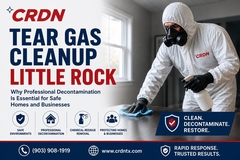
Tear gas cleanup Little Rock is a specialized emergency decontamination service that homeowners, businesses, property managers, schools, healthcare facilities, and insurance professionals may unexpectedly need after law enforcement incidents, burglaries, civil disturbances, or accidental chemical exposure. While tear gas is designed as a non-lethal crowd-control agent, the chemical residue it leaves behind can contaminate entire buildings, affecting indoor air quality, furnishings, electronics, HVAC systems, and virtually every exposed surface.
Many property owners believe they can simply ventilate the building or wipe down affected areas. Unfortunately, tear gas residue is far more persistent than it appears. The fine particles settle into porous materials, circulate through ventilation systems, and can reactivate when exposed to humidity or heat, causing recurring irritation long after the original event.
CRDN Team Crouch provides professional tear gas decontamination, chemical residue cleanup, and emergency decontamination services throughout Little Rock and surrounding communities. Using specialized cleaning protocols and advanced decontamination techniques, their team helps restore homes and businesses to a safe, habitable condition while minimizing disruption and protecting valuable contents.
According to the Centers for Disease Control and Prevention (CDC), riot control agents such as tear gas can cause eye, skin, and respiratory irritation, making proper decontamination essential before reoccupying affected spaces.
Understanding why professional tear gas cleanup Little Rock services are necessary can help property owners protect their health, preserve valuable belongings, and return to normal more quickly.
Tear Gas Cleanup Little Rock, Why Professional Decontamination Matters
Tear gas cleanup Little Rock requires far more than ordinary cleaning because tear gas particles are designed to disperse quickly and cling to surfaces.
Affected areas often include:
Walls
Ceilings
Floors
HVAC systems
Upholstery
Carpets
Clothing
Electronics
Cabinets
Air ducts
According to the Occupational Safety and Health Administration (OSHA), chemical contaminants require appropriate hazard assessment and cleanup procedures to protect occupants from ongoing exposure.
Without professional tear gas residue cleanup, contaminants may remain active for weeks or even months.
CRDN Team Crouch follows structured decontamination protocols designed to eliminate chemical residues safely while protecting both occupants and property.
What Is Tear Gas?
Despite its name, tear gas is not actually a gas.
It is typically a fine chemical powder or aerosol dispersed into the air.
Common riot control agents include:
CS (2-chlorobenzalmalononitrile)
CN (chloroacetophenone)
OC (oleoresin capsicum)
According to the National Institute for Occupational Safety and Health (NIOSH), these agents are intended to cause temporary incapacitation but can contaminate enclosed environments extensively.
Once deployed indoors, particles settle onto virtually every exposed surface.
This contamination is why professional professional decontamination services are essential.
Why DIY Tear Gas Cleanup Can Be Dangerous
Many property owners attempt to clean affected areas themselves.
Unfortunately, household cleaning methods often spread contamination rather than remove it.
Common mistakes include:
Vacuuming contaminated carpets
Using household cleaners
Sweeping residue
Running HVAC systems
Washing fabrics without proper containment
According to the Environmental Protection Agency (EPA), improper handling of chemical contaminants can increase exposure risks and spread hazardous materials throughout a property.
Professional hazardous residue removal helps prevent cross-contamination and protects occupants from continued exposure.
Health Risks Associated with Tear Gas Residue
Even after visible residue disappears, contamination may remain.
Exposure can contribute to:
Eye irritation
Skin irritation
Persistent coughing
Difficulty breathing
Burning sensations
Allergic reactions
According to the Agency for Toxic Substances and Disease Registry (ATSDR), chemical irritants can continue affecting indoor environments if residues are not removed properly.
Professional tear gas decontamination helps eliminate these lingering hazards.
CRDN Team Crouch prioritizes occupant safety throughout every cleanup project.
How Tear Gas Affects Homes and Businesses
Tear gas contamination extends beyond visible surfaces.
Residue often penetrates:
Upholstery
Carpeting
Draperies
Bedding
Clothing
Office furniture
Electronics
The fine particles can also circulate through HVAC systems, redistributing contaminants throughout the property.
Professional chemical residue cleanup addresses contamination comprehensively rather than focusing only on visible areas.
The Professional Tear Gas Cleanup Process
Successful tear gas cleanup Little Rock projects follow a structured restoration process.
1. Site Assessment
Technicians evaluate:
Extent of contamination
Type of property
HVAC involvement
Contents exposure
2. Safety Controls
Containment measures help prevent further spread of contaminants.
3. Contents Evaluation
Furniture, textiles, electronics, and other belongings are inspected for contamination.
4. Surface Decontamination
Specialized cleaning agents remove chemical residues from affected materials.
5. HVAC Cleaning
Ventilation systems are cleaned to eliminate airborne contaminants.
6. Final Verification
The property is evaluated to ensure it is safe for reoccupation.
CRDN Team Crouch follows industry best practices throughout every stage of the process.
Protecting Valuable Contents During Cleanup
Tear gas affects more than structures.
Personal belongings often require specialized restoration.
These may include:
Clothing
Upholstery
Electronics
Artwork
Documents
CRDN Team Crouch integrates contents restoration services into the decontamination process whenever appropriate, helping reduce replacement costs and preserve valuable belongings.
Electronics Require Specialized Care
Electronic equipment exposed to tear gas residue may experience corrosion and contamination.
Affected devices may include:
Computers
Televisions
Security systems
Servers
Medical equipment
According to the National Institute of Standards and Technology (NIST), corrosive contaminants can compromise electronic performance if not removed properly.
Professional cleaning helps improve recovery potential while reducing replacement expenses.
Insurance and Documentation
Professional documentation is critical during any contamination event.
According to the National Association of Insurance Commissioners (NAIC), detailed documentation helps support insurance claims and improves communication between policyholders and insurers.
CRDN Team Crouch provides:
Inventory documentation
Damage assessments
Restoration records
Communication support
This helps streamline the claims process while improving transparency.
Commercial Tear Gas Cleanup
Businesses affected by tear gas contamination face unique challenges.
Contaminated commercial properties may include:
Retail stores
Banks
Schools
Medical facilities
Office buildings
Government facilities
According to the U.S. Small Business Administration (SBA), minimizing operational downtime is critical following emergency incidents.
Professional commercial tear gas cleanup helps organizations resume operations safely and efficiently.
Why Speed Matters
The longer tear gas residue remains inside a building, the greater the likelihood of:
Continued exposure
Cross-contamination
HVAC circulation
Material degradation
Rapid emergency decontamination services help reduce these risks significantly.
CRDN Team Crouch responds quickly to stabilize affected properties and begin the restoration process immediately.
Why Local Expertise Matters
Searching for tear gas cleanup Little Rock means finding professionals who understand local response needs.
Local restoration teams provide:
Faster arrival times
Regional expertise
Immediate containment
Ongoing communication
CRDN Team Crouch proudly serves Little Rock and surrounding communities with specialized decontamination services designed to restore safe indoor environments.
Why CRDN Team Crouch Is Trusted for Tear Gas Cleanup
CRDN Team Crouch has earned the trust of homeowners, businesses, and insurance professionals through:
Rapid emergency response
Specialized decontamination expertise
Advanced contents restoration
Electronics restoration
Textile restoration
Insurance coordination
Detailed documentation
Their integrated approach helps clients recover safely while protecting valuable property and minimizing long-term losses.
Tear gas cleanup Little Rock requires specialized knowledge, advanced cleaning techniques, and a comprehensive approach to decontamination. Attempting to clean chemical residues without professional assistance can leave hazardous contaminants behind and increase health risks for occupants.
CRDN Team Crouch provides professional tear gas decontamination, chemical residue cleanup, hazardous residue removal, residential tear gas cleanup, commercial tear gas cleanup, and contents restoration services that help homeowners and businesses recover safely after contamination events.
When chemical contamination affects your property, professional decontamination is the safest path to restoring a healthy indoor environment.
?? Call CRDN Team Crouch at (903) 908-1919
?? Visit www.crdntx.com
CRDN — Restoring safe environments, protecting valuable contents, and helping communities recover with confidence.
Categories
Recent Posts
-
June 25, 2026
Tear Gas Cleanup Little Rock: Why Professional Decontamination Is Essential for Safe Homes and Businesses
-
June 23, 2026
Electronic Restoration Services Near Me: Saving Fire, Water & Smoke-Damaged Electronics
-
June 16, 2026
CRDN of MidSouth: Why Homeowners, Businesses, and Insurance Professionals Trust Us for Contents, Textile, and Electronics Restoration